Showing posts with label ireland. Show all posts

Wednesday, August 11, 2021

Join Me at Island in the City

Hello. Long time no post. It's been years since I posted on this old blog of mine. There's an excellent chance no one ever comes around here anymore (even by accident), except for bots. But on the off chance that someone lands on this blog at some point, I wanted to announce a new newsletter/project of mine. It’s a newsletter at the new publishing platform Substack called Island in the City.

To semi-quote myself in the About page of the newsletter, I started it for fun and community to cope with the continued social isolation. The newsletter will dive into topics that have preoccupied my mind during the long days and nights of the pandemic. Stuff like creativity & productivity, loneliness, favorite artists, places & people, aging & ageism, class & classism, storytelling, and the life and geography of big cities & tiny islands.

I already have my first post up, about the Chicago outsider artist Henry Darger. Please check it out. This is also a two-parter post–you can expect the second part to go up this week.

What makes this different from my website and the occasional posts here?

A few things. The newsletter will be bi-monthly at the most, monthly at the least. That’s much more frequent than my posting here on my personal site.

You can also subscribe to the newsletter and get an email whenever a new post goes up. There are links to subscribe in the newsletter at Substack, and you can also do it here.

You’ll notice there’s a payment option. For now, my posts will be free. Maybe they always will–this is brand new journey and I haven’t a clue what’s around the corner with this. For all I know, there are no corners. Anyway, Substack was created as a self-publishing platform like Medium, WordPress, and Blogger, but with more of an ability to earn income for your writing. If you’ve been paying attention to changes in media and publishing over the last 10-15 years, and certainly if you’ve worked in media, you’ll know how changes have set so many media professionals adrift, especially many of a certain generation (cough, Gen X, cough). Layoffs and scale staffs, newspaper foldings, media conglomeration, the rise of blogging, the glut of blogs, free media, social media, unpaid internships, the decline of print–all of this has turned publishing, journalism, and media careers upside down and affected many writers’ income. Substack, like Patreon and other “content monetization platforms” (ugh, what a phrase–but it is what it is), allow for writers to charge for their newsletters to give some of the power back to creators.

I’m under no illusion that anyone wants to pay for my ramblings. But since the option is there, if you’d like to show your support by paying, I’d of course feel grateful and encouraged. The subscription cost is $5 a month or $50 a year. Should I ever start charging for the newsletter, it will most likely be the model most other writers are using: some free posts that all subscribers and visitors to the site will get, mixed with some locked ones for paying subscribers only. There is also an option for me to “grandfather in” my original free subscribers so they continue to get the newsletter for free even if I start charging–a gift for the support of loyalty.

What can subscribers expect to read about?

Here are some topics that I plan on writing about beyond my first posts about Henry Darger:

  • Chicago outsider artists Vivian Maier and Lee Godie
  • the Chicago Riverwalk, its bridgehouses, and the Technicolor Man of downtown Chicago,
  • Jean-Baptiste DuSable, city segregation, and the sundown towns of Illinois
  • Tim Robinson and the Aran Islands
  • the islands of Chicago (Goose, Northerly, Stony, Blue)
  • learning a minority language (Irish) in America
  • the sand dunes of Indiana, the boy who fell inside one, and the Girl X case that broke Chicago’s heart
  • the Green Mill and Michael Mann’s/James Caan’s great film, Thief
  • the Pigeon Man of Lincoln Square
  • informal economies and the vanishing Chicago hot dog vendor
  • maybe more (Chicago graffiti art, Ronnie Woo-Woo, Jazz Record Mart (RIP), other Irish islands I have known, who knows?

How to subscribe and connect

To subscribe just go to Island in the City, click the Subscribe button, and add your email. If you like a post, please share. And if you like the newsletter in general, please tell all your like-minded friends.

As a gift for reading this, here’s a deer pic for your enjoyment. And there’s more where that came from.

Thursday, May 24, 2018

For Ireland on May 25th...aka Repeal Day

Do this right, Ireland... #repealthe8th #aisghair #togetherforyes #longtimecoming #chicagoforrepeal


Thursday, April 9, 2015

Baking At Ballymaloe

Debbie Shaw teaching a baking course at Ballymaloe Cookery School, in Co. Cork, Ireland.
This picture was taken in September 2013 at a famous cooking school in the southern tip of Ireland. The school is called Ballymaloe, located in County Cork, and the woman teaching in the photo is named Debbie Shaw. All those goodies you see in the foreground of the picture were made by her during the course of the lesson: soda bread, scones, focaccia, lemon poppyseed cupcakes, and sponge cake with lemon curd and raspberry filling. This course was part of a women's tour I organized for my former tour company, Wayfaring Women Tours. This was actually the penultimate day of the tour, which lasted 9 days and took us from Galway City, around Connemara, to the Burren and the Aran Islands, down to Dingle and through County Kerry, across Cork to Ballymaloe and Blarney. Our time at Ballymaloe also included an overnight stay in the truly beautiful country home (called Ballymaloe House) and dinner at the house. Ballymaloe was one of the definite highlights of the entire tour.

I included a visit to Ballymaloe, both the cooking school and the country home, on the tour not only because I knew it would be a great time, but also because I wanted the guests on the tour to come away from their time in Ireland with a positive view of Irish food, cooking, baking, and eating. Ballymaloe is famous in Ireland (and throughout Europe) for changing the notion of Irish cooking as being bland, boring, uninspired, and unhealthy. What Myrtle Allen, who opened Ballymaloe House in 1963, did down in County Cork over 50 years ago was effectively start a revolution. At Ballymaloe, emphasis was placed on using local ingredients and "growing your own" vegetables and products as well as embracing traditional recipes and country skills (from cheese making to home brewing to baking your own bread). All the members of the tour got a chance after the lesson to make their own scones and cakes in the Ballymaloe kitchen and got recipes to take home with them. Needless to say, we had a great time. That's me showing up one of my magnificences below. ;-) You can read more about our time at Ballymaloe and about the school and house in general, and view more pics, at this old post of mine: The Ballymaloe Revolution. I absolutely recommend a visit to Ballymaloe--the school, the house, the restaurant, even just the gift shops--for anyone visiting Ireland or County Cork. 

Fringe.

Wednesday, December 31, 2014

My Year In Brief Review

Hi. As has become custom on this blog, I'm spending the last day of the year writing a post that sums up my year in writing and wayfaring. Usually I do the top 10 or top 5 blog posts of the year, going by number of hits on each post. But this year I've decided to re-share the links to 4 pieces I had published in 2014 along with the most popular post on my blog for the year. Here's the list:

5. I had two poems published in the Spring 2014 issue of Wilderness House Literary Review. The poems are "Australia" and "The Fading of the Heart." The first one I wrote for a workshop at the Poetry Center in Chicago. At the time, I was a fairly frequent visitor to the poetry slams at the Green Mill in Uptown, and so I think the poem shows that influence in its length and use of alliteration. I had returned from Australia, where I spent about a month in the Outback, less than a couple months before writing this poem. The second poem was written more recently. It's about Ireland, a place where I used to spend a lot of time and loved but also experienced a fair share of heartbreak, frustration, and disappointment. I'll probably return there of course, but it may be a long while.

4. On Easter Sunday in 2014, Literary Orphans released its Irish-themed issue, guest edited by James Claffey. My non-fiction piece "All Apocalypses, Bitter and Sweet" was included. It's a longer piece. I hope people will read it if they haven't already. Looking back, I'm surprised this got accepted, as it's rather local and much of it is about a medieval Irish saint that most people outside of Ireland have never even heard of. I'm glad Literary Orphans took a chance on this anyway, and I hope readers like it.

3. In August another poem of mine was published at Eunoia Review. The poem is called "Transference (Middle West)." It's about my maternal grandfather and the transition he made as a young man moving from the farm in Iowa where he grew up to the south side of Chicago where he raised a family. A lot of people seemed to like this one.

2. In the fall, Literary Orphans accepted another piece of mine, a short poem for its Ingrid Bergman issue. The poem is called "Golden Day." Some lovely photography by Marta Beveacqua was chosen by the editors to go along with this one. The photo below, meanwhile, best illustrates how I felt about getting something accepted by Literary Orphans twice in one year.

Pinky Tuscadero.

1. And finally, the most viewed post on this blog for 2014, by a mile, was my post about Second City, the famous improv school and theater here in Chicago: You Can Fail Here. What was the big attraction with this post? Why did it get more than double the hits compared to most of the my other posts in 2014? Beats the hell out of me. Second City is a popular and revered place. So is Chicago in general. And failure is always a winning topic--so many of us can relate. I know I certainly could in 2014, between a truckload of rejections I got for other poems and stories I wrote and a fellowship I applied for as well as a huge fire that nearly wiped out my workplace and displaced me and all my co-workers for more than half the year. On the other hand, I think I had a pretty successful year in terms of getting a few things published--this was my first year of submitting regularly after all. I also got a chance to contribute to a couple new great projects: Rockwell's Camera Phone and Booma: The Bookmapping Project.

Still, I really hope 2015 is a better year. I'll have some thoughts on writing goals for the upcoming year in a post within the next couple weeks, and tomorrow I'll hopefully have a post up that reveals some travel plans. Thanks to those of you who have taken the time to read my writing. I appreciate and am helped by any support and encouragement more than you might know.

Chicago in January 2014. Good motto for 2015 too.

Friday, September 12, 2014

Just About A Year Ago


This picture was taken about a year ago, September 2013, on the Dingle Peninsula in County Kerry, Ireland. It was on the women's tour I led for my old travel company. We'd been lucking out with the weather on the tour, but it was especially important that we have a good day for the full day we were to spend touring the Dingle Peninsula. And we got it. These two ladies were both from Seattle. Carol and Kathy. One is Japanese American, born and raised in Hawaii. The other is Native American, born and raised on a reservation in Washington state. They were great travelers and a lot of fun. Neither had been to Ireland before, and one of them had never been out of the U.S. I'm glad they had a beautiful day to spend in Kerry.

Sunday, April 20, 2014

Orphans and Apocalypses

Hi friends. Some new pieces of mine are up at a couple sites, so I'm sharing the news and links.

Today the latest issue of Literary Orphans went live. It's the Orphans' gang's 12th issue and it's themed around Ireland and Irish writers--with master satirist Jonathan Swift serving as the issue's granddaddy and inspiration, and master storyteller James Claffey serving as the issue's guest editor (taking over the role from LO's ed-in-chief, Mike Joyce). Here's a link to Claffey's editor's note with his thoughts on the issue and how the pieces in it confront and challenge Ireland's long literary history and Irish writing's more tried and tired themes.

There's a piece of mine in this issue. It's called "All Apocalypses, Bitter and Sweet." It's about a few things. An Irish saint named Gobnait, for one. Also bees, women, broken hearts, apocalypses, the Aran Islands, and the search for resurrection. Given that today is Easter, the ultimate day of resurrection in the West, maybe you'll find my story a good fit for Easter reading. In any case, I hope you give it a read and hope you enjoy it too.


Cill Ghobnait on Inis Oirr, looking towards mainland
Altar of Cill Ghobnait, Inis Oirr
 
Humble Cill Ghobnait with grave in foreground
I should say that this particular publication is a pretty big deal to me. Literary Orphans is a fine and fearless literary project--and homegrown in my hometown of Chicago to boot. As well, I recognize a few of the names attached to this issue--there are some true rising-star writers here and it's an honor to be featured in an issue alongside them. I hope you give all the pieces in this issue a read. And thanks again to James Claffey, Mike Joyce, and Scott Waldyn (managing editor at Literary Orphans) for accepting my piece and for all the hard work they put into this issue.

There's also a new pic of mine up at Rockwell's Camera Phone, which in itself has a spanking new look. It's a picture I took in Ireland, on the Dingle Peninsula, last September.

Finally, another poem of mine has been accepted at Eunoia Review. It will be published in August.

Monday, March 31, 2014

Wilderness Poems

Hooray! My two poems are up and ready to read at the latest issue of Wilderness House Literary Review. The poems are "Australia" and "The Fading of the Heart." If you read them, I hope you enjoy them. The direct link is here.

Thanks so much to the editors at Wilderness House--Steve Glines and Irene Koronas--for selecting my poems. I'm looking forward to reading all the contributions to the Spring 2014 issue.

In Australia.

Friday, March 7, 2014

Good With The Bad

February was not a good month. I wish that complaint was solely in reference to the perpetually freezing temperatures we've been enduring this year in Chicago, including all through February. But bad weather was just the half of it this past month.

At the beginning of February, the bakery where I work part-time was damaged by a big fire that started in the restaurant right next door. The fire started about 3:45 AM on a Sunday morning in the basement of a Japanese restaurant housed in an old (by American standards) building in town. It took 4 hours for the fire departments (note the use of plural here--several in the area were called out) to put it out. There were two bakery employees--the night bakers--in the building at the time. Fortunately, they smelled smoke and got out in time. So did all the residents and pets who lived in the apartments above the restaurant and elsewhere in the building. But those residents all lost their homes in the fire; the restaurant and a neighboring realtor's office and the town's chamber of commerce were severely damaged and are set for demolition; and the bakery has been temporarily displaced since the morning of the fire. Here's a video with footage of the fire:


While a firewall and the work of the firefighters kept the fire from spreading into the bakery, the bakery got some water and smoke damage and has yet to have its power restored. Until the store can be reopened, the bakery is fortunate in that it has a wholesale facility in a neighboring village where it can bake (but not sell) most of the same products it made at its store location. For 2 weeks after the fire, the bakery sold out of a small room in the village hall (where it kind of looked like we bakery employees were just having a community bake sale). Since then, we've been working out of a temporary location a couple blocks from the original location.

This fire came at an especially bad time for the bakery, as it happened just a few weeks before its biggest time of year, Paczki Fest. Paczki, for those of you who sadly don't know, are Polish jam or cream-filled pastries that are traditionally made and eaten in the days leading up to Ash Wednesday and the long Lenten fast. They're a big deal around here in Chicago, where the Polish population is second in the world only to Warsaw. The bakery I work at is owned by a Polish-American family who have been in the business for decades. During Paczki Fest, the bakery gets more customers than during major holidays such as Christmas and Thanksgiving and sells nearly 50 varieties of paczki. Needless to say, this fire was one of the worst things that could happen to Chicagoland's north-side Polish and otherwise paczki-loving community. Paczki Fest prevailed, however, and went ahead as always. Never underestimate the power of the paczki.

I wish that was where the bad news of February ended. But near the end of the month one of my mother's closest friends lost a long and very courageous battle with cancer. Though her friend's death wasn't sudden or a surprise, my mother was upset and already misses her friend greatly. She was a unique and strong person and a friend to my mother for over 60 years.

Two days after this came the shocking news that an old friend in Ireland died when he fell into the sea off one of the Aran Islands. He was only in his early 50s. He was a popular man and an unforgettable character, and he was friends with many of the visitors who've come to the islands over the years. He had a mighty laugh. I saw him last time I was in Ireland, last fall. It is hard to imagine the island without him.

It's the 7th of March now. February is over. The cold weather is still here, still being stubborn, and there's still at least 2 feet of snow on the ground around here. But the beginning of this month brought a little good news--for me at least. An essay of mine will be published in an upcoming Irish-themed issue of the wonderful online journal Literary Orphans next month. And some pictures of mine will be featured on a blog project that started up this year that explores the "new Americana," called Rockwell's Camera Phone. I'm thrilled of course. Acceptance always makes me feel like maybe I'm finally doing something right. As with the poems I mentioned in the previous post, I'll post more info and links when the publishing/posting dates arrive for all these pieces.

Hope a better, warmer wind comes along for this 2014 soon.

Sunday, November 10, 2013

The Ballymaloe Revolution

Wayfaring Women tour group in front of Ballymaloe House, Sept. 2013

When I tell people in the U.S. that I miss Irish cooking, I always get a laugh. And when I visit friends in Ireland, they're always trying to steer me to Thai restaurants and tapas bars or make home-cooked meals for me featuring curry or pasta or tortillas or some such imported specialty. No matter how much I tell them I'm excited to be back in the country, where I can have the traditional Irish foods I've been missing, they don't seem convinced. Irish cooking has had a poor reputation around the globe for too long a time I suppose, and maybe even many locals still figure that the fight to prove otherwise is a lost cause. 

But Irish cooking is far from a lost cause. In fact it's a winning one. Any regular visitor to the country over the last two or three decades, like me, can tell you so. Likewise with anyone who's ever visited Ballymaloe in Shanagarry, County Cork. There are two Ballymaloes, and here I mean both of them--Ballymaloe House, the country home and restaurant first opened to the public in 1964 by Myrtle and Ivan Allen, and Ballymaloe Cookery School, begun in 1983 by the Allens' daughter-in-law Darina Allen and her brother Rory O'Connell.

Debbie Shaw teaches a baking course at Ballymaloe Cookery School. Check out the assortment of baked goodies: soda bread, scones, focaccia, lemon poppyseed cupcakes, and sponge cake with lemon curd and raspberry filling.
View of the front grounds from one of the guest rooms at Ballymaloe House.

Clearly, Ballymaloe is a family affair. It's also an empire largely powered by women, from Myrtle to Darina to Rachel Allen, Darina's daughter-in-law and the latest cookery celebrity to emerge from Ballymaloe. The influence these three women have had and continue to have on modern Irish cooking cannot be overstated. Their lifework is a large part of the reason for the turnaround in Irish cooking's reputation in recent years. A recent television special in Ireland on Myrtle Allen clarified as much. Long before the establishment of the Slow Food Movement or farmers' markets in Ireland, Myrtle practiced and championed an approach to cooking that would form the basis for slow food methods. Meanwhile, it was Darina Allen who spearheaded the Slow Food Movement and the founding of farmers' markets in Ireland. In more recent years, Rachel Allen has become the new face of Ballymaloe, a popular and ubiquitous host of Irish cooking programs and author of Irish cookbooks and food columns.

The Ballymaloe recipe for good food and good cooking is really simple and straightforward. Use fresh, locally sourced ingredients. Make meals from scratch as much as possible. Grow your own. And if you can't, then buy from local and ethical suppliers--local fishermen, farmers, bakers, gardeners, butchers, cheese makers, brewers...you get the drift. Reclaim some of the skills your country grandmother may have lived by, such as making your own butter or jam or baking your own bread or raising your own hens or pigs or cows...or simply growing your own herbs on the window ledge of your city apartment.

Pumpkin patch outside the glass house at Ballymaloe Cookery School
Cabbages and flowers growing at Ballymaloe Cookery School
Tomatoes grow on vines in the glass house at Ballymaloe Cookery School. The school grows and raises all the ingredients used in its cookery courses and served in its cafe.
Ballymaloe even raises its own animals on a farm on the school grounds.

Of course, not everyone has a country grandmother to learn from. And for a long time in the 20th century in Ireland (and going into the 21st), country ways were viewed by many as a way of life to abandon and even be ashamed of. Rural life in Ireland was often stereotyped as backwards and associated with poverty and oppression. Even when romanticized, there was still a stigma of poverty attached to country life and a sense that any attempts to reclaim or revive the culture of the countryside were probably a lost cause. In terms of the role of food and cooking in rural Irish life, it must be remembered that one of the most significant events in Ireland's long history was a series of potato crop failures that spiraled into the Famine of the mid-19th century. The Famine caused at least a million deaths in Ireland and drove another 2 million Irish out of the country to North America, Britain, the European Continent, Australia, and beyond in the late 1840s alone. The great majority of these people who died or emigrated during the Famine were country people, the rural Irish, the life blood of traditional Gaelic culture and Gaelic ways. At the same time as this massive hemorrhage of life throughout the Irish countryside, large volumes of food were inexplicably and unconscionably being exported from Ireland to Great Britain for commerce. Rural Ireland never really recovered from this horrific time, not even to this day, certainly not population-wise. Since the 1840s, emigration has been the one tradition of country life in Ireland that has never disappeared, never needed reviving.

I include this little history lesson because I think you can't fully understand how revolutionary the Ballymaloe approach to Irish cooking and food was until you understand the against-all-odds experience of the rural Irish and the difficulties in presenting Irish country skills in a positive light, much less in reviving them. At the time Ballymaloe House first opened to the public in the 1960s, the culture to emulate in the hospitality industry was French, not Irish. You wanted to learn how to cook or just to eat well, you went to France--not to an isolated farm and old home in a tiny village like Shanagarry in County Cork. The idea that the best in food and hospitality could come from an Irish housewife using locally grown, raised, and made ingredients (rather than importing products from France or Britain or from anywhere outside Ireland) would have been laughable to many self-proclaimed foodies back in the 60s and 70s. What did the Irish know about cooking? What did an Irish housewife know about hospitality?

Inside one of the lovely guest rooms at Ballymaloe House
The Top Room at Ballymaloe House

Quite a bit as it turned out. The Irish have long been known for their hospitality--it's been a vital practice in Irish culture going back to pre-Christian times. Meanwhile, Myrtle Allen had the sense to simply work with what she had and what she knew to make good meals first and a comfortable home away from home later for guests at Ballymaloe.

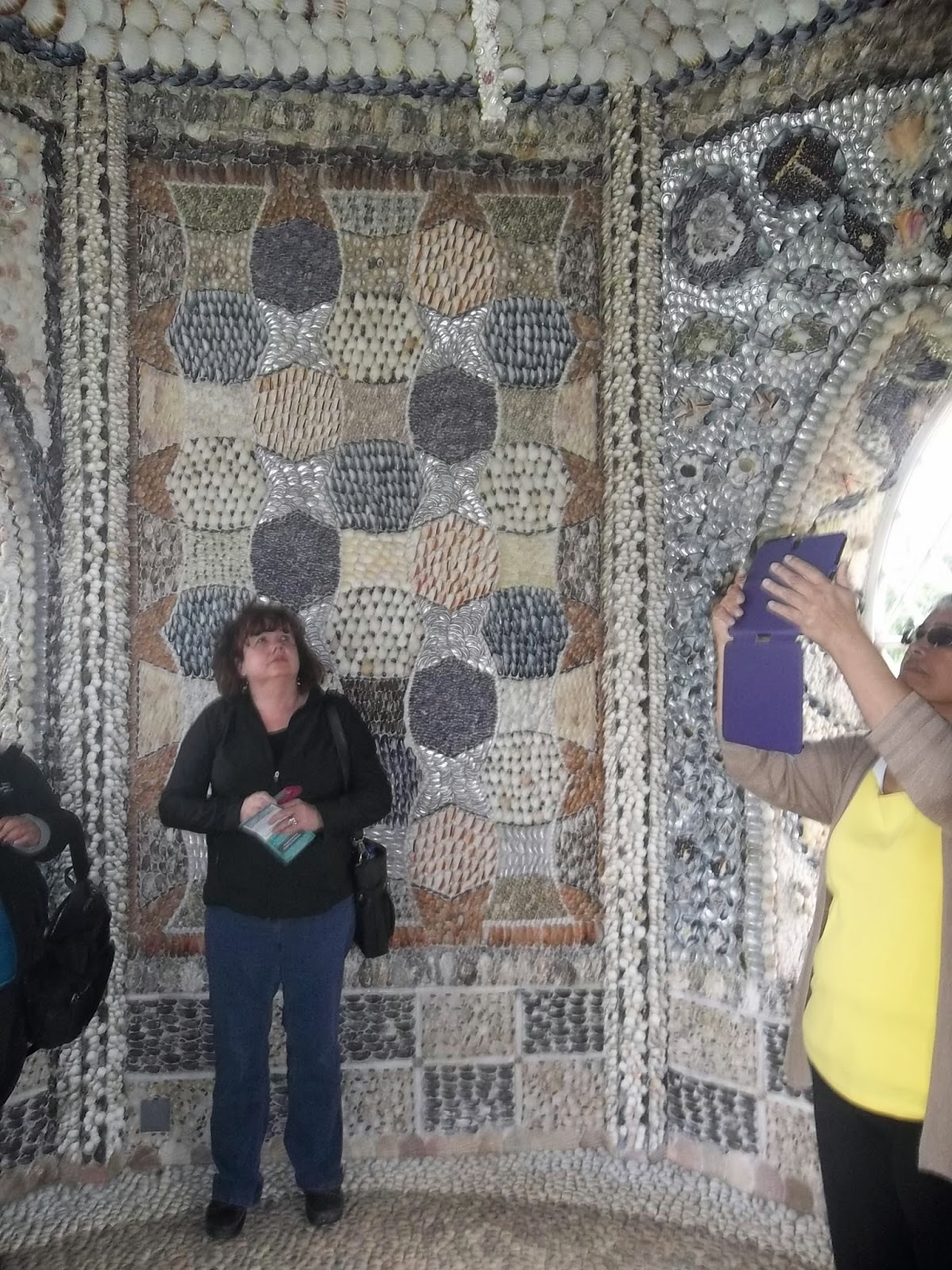
Today, Ballymaloe is internationally renowned as one of the best guesthouses and finest cooking schools in Europe. It has produced some of Ireland's best chefs and cooks, who in turn have gone on to change the nature and reputation of Irish cooking throughout Ireland and beyond for the better. Guests come to Ballymaloe House for a country Irish experience that is both luxurious and genuinely friendly, and students come to Ballymaloe Cookery School to master everything from how to make sushi to how to make a loaf of classic Irish soda bread. At the house, guests stay and eat in the same rooms where Myrtle raised her family; at the school, students learn to forage food from the same surrounding countryside where Myrtle gathered ingredients for her home-cooked meals. Beyond the house are acres of fields and grounds that include a tennis court, swimming pool, croquet set, and wooded walkways. Beyond the school are formal gardens, a glasshouse where vegetables are grown, a Celtic maze, a giant chess set, and an amazing little house with an interior made entirely of shells.

The Herb Garden at Ballymaloe Cookery School
Looking down path through the Herbaceous Border to the Shell House at Ballymaloe
The Herbaceous Border garden at Ballymaloe Cookery School

Inside the Shell House
Detail of shell work inside the Shell House

I had the privilege of staying at Ballymaloe House and taking an afternoon baking course with a tour of the grounds at Ballymaloe Cookery School this fall with a group for my tour company, Wayfaring Women Tours. For many women on the tour, Ballymaloe was their favorite experience of their time in Ireland. We were treated well at both the house and the school and had a great time in our course and enjoyed a delicious dinner. We learned how to make savory scones and Irish brown bread, with insider tips on "letting the fairies out" and "using the claw." We drank refreshing elderflower cordial and decorated cupcakes in Cork colors (in honor of our wonderful Cobh-born-and-bred tour driver, John) and made lemon curd (which was also turned over to John in gratitude). In our guest rooms we found everyone had her own fluffy white robe, glass bottles of Ballymaloe spring water, and little gifts of Ballymaloe relish and Voya bath products.

Our savory scone creations at Ballymaloe
More of our Ballymaloe masterpieces: pizza bread made from a basic soda bread base, lemon curd, and a sponge cake with strawberries and cream

The bright and colorful cafe and course room in Ballymaloe Cookery School
When I started my tour of Ireland, some of my group remained convinced that Irish cooking was all about overboiled vegetables. They didn't think they came to Ireland for the cooking. By the tour's end, I think I managed to change their minds. Or more accurately, I think Ballymaloe changed their minds. Ballymaloe and the three mighty Irishwomen who've steered it to such success: the Allen women, Myrtle, Darina, and Rachel.

Wednesday, October 9, 2013

Concrete and Celtic Seasons: Two Gardens

I come from a place where the official motto is Urbs in horto...City in a garden. In Chicago terms, that's translated into an extensive public parks system (pretty much one for every neighborhood with several large-scale parks "anchoring" the city's downtown and north, south, and west sides) and miles and miles of beaches and lakefront. You might also add to the Urbs in horto vision that giant lake called Michigan which borders Chicago--even though the lake was here long before the city was a dream in any pioneer or planner's mind. You should also include the Chicago River, the multiple smaller lakes and rivers that bound the Chicago area, the remnants of original prairie and native flowers that have been fiercely reclaimed and preserved, and all the wildlife that you find in and around the city--from our urban coyotes to our summer fireflies to our ubiquitous suburban squirrels, raccoons, possums, skunks, bats, bunnies, foxes, and family pets.

Skyscrapers of Chicago viewed from prairie wildflower garden in Lincoln Park
That's a lot of nature. Much more than folks around the world who've never been to Chicago likely realize. It's not quite the concrete jungle and gangster playground non-Chicagoans imagine it to be.

Graffiti in alley in Lincoln Square, Chicago
I mention all this because I was gonna begin this post with some cliches about how "we" (whoever that is) tend to forget, ignore, or take for granted the cycles of nature and life that surround us in this comfort and technology-worshiping day and age. I suppose by "we" I was thinking of people who live in urban and suburban areas in developed countries. Not that I buy into the notion that city or suburban people are disconnected from nature, but I've known a few gloomy, judgmental types who've tried to sell such a notion to me. I've been told by these sad folks that I come from an "artificial" culture and country--plastic, corporate, materialistic, sterile, yada yada--and I'm guessing the evidence for this lies in Americans' appreciation for stuff like air conditioning and grocery stores and life-saving vaccines and antibiotics and roomy cars. I wonder would it matter to the folks who have such a low opinion of the place I come from (whether they're talking the U.S. or Chicago or suburbia) that while I write this I sit in a coffee shop, yes, corporate-owned, with a parking lot full of cars...that's well interspersed with trees full of leaves newly and vibrantly colored by the changing of summer into fall as well as half a dozen plots of wildflowers? Does it matter that right across the street is a farmers' market bustling with suburbanites stocking up on late-summer and early-fall fruits and vegetables, home-made pies, jams, and hummuses, and locally raised and butchered meats? It's a market held every Sunday from late spring to late fall, and if you miss this one there are other farmers' markets on every and any day of the week in nearly every suburb and neighborhood in Chicago--including downtown, right smack dab in the middle of all the skyscrapers. Hell, they even grow and hawk vegetables on top of the buildings in downtown Chicago. Meanwhile, last night I witnessed a stand-off between a skunk and a raccoon in my backyard, and later tonight as I finish this post I'll write to the song of crickets and cicadas that drown out the hum of late-night traffic and freight trains that run through my town. So much for the picture of a plastic and artificial American landscape.
Summer gardens in Lincoln Park, Chicago

The city in a garden? In the courtyard at the Fourth Presbyterian Church on Michigan Avenue in downtown Chicago

Yes, this part of the American landscape, Chicago, is a big, brawling city of crime and corruption and corporations...and a Midwestern city of farmers' markets and bountiful local food and green spaces and four kinds of seasons and all the fine and fierce weather that comes with them. A heartland city. Once upon a time, not that long ago, this city was the nation's hub for everything a farmer could raise and sell and grow and mine in the U.S. Everything that came into this city went back out to everywhere else in the country. Chicago, like nature, worked year-round to keep the exchange going, the cycle turning--but it roared loudest and throbbed strongest during the harvest season. Years ago, the stockyards and many of the original transport systems in Chicago that were supported by this national exchange of nature's bounty were demolished or dismantled and erased from the city's landscape. The city was "cleaned up," prettified. But the cycle continues in new forms of exchange and transport, as well as new forms of expression and appreciation, such as the ubiquitous farmers' markets and parks and the city's experiments in high-rise and restaurant rooftop gardens. This is not a city that tries to hide its middle American cowtown roots--in fact it wears its mucky, Midwestern roots on its sleeve, lets the world see how a heartland town can thrive and succeed and support a nation, leaves its roots to spread and anchor all forms of industry and creativity in the city, and keeps coming back, keeps surviving and evolving, even as other once-great Midwestern cities and former cowtowns fall into bankruptcy and misguided scrambles at revisionism and reinvention.


Beaches of Chicago's north side viewed from the Hancock Building

Bridge over the Chicago River in downtown Chicago
I wish people outside Chicago, and outside the U.S., understood this better. I wish they knew how important, special, and amazing Chicago is. I wish as I traveled I got less people asking me questions like if we eat or have access to fresh vegetables where I come from or if I ever swam in a natural body of water before traveling to a seacoast. I wish the world knew more about Chicago's garden-city roots and less about its gun-violence rates. Not that Chicago and the world should ignore the city's problems any more than is already the case. I just wish there could be a more balanced view, one that reflects the daily life and connections to both nature and culture that Chicagoans--and Illinoisans and Midwesterners--of all backgrounds cultivate and enjoy. People in the poor neighborhoods in Chicago appreciate when the sun is bright and the sky is blue and feel the changing of the seasons, just as people in the wealthy neighborhoods do. People in the "sterile" suburbs hit the beaches in the summer, go to farmers' markets and orchards in the fall, build snowmen in the winter, fall in love in the spring. So do people on the "gritty" south side. We all contribute and we are all connected--it's the Chicago way. The genuine Chicago way. Don't let anyone convince you different.

Maybe what Chicago needs to clarify its vital importance and deep connection to the American landscape and environment is some place where people can see just how it all works, how it all comes together. Another park maybe, another garden, that locals and tourists alike can visit to learn about the Chicago life-cycle. Some place designed by someone who cares equally about the city's nature and culture, and who can figure out how the two meet and make the city (and the U.S.) what it is today. Some place with beauty and a sense of humor, a good dose of whimsy as well as wisdom, and an inclusive and friendly spirit.

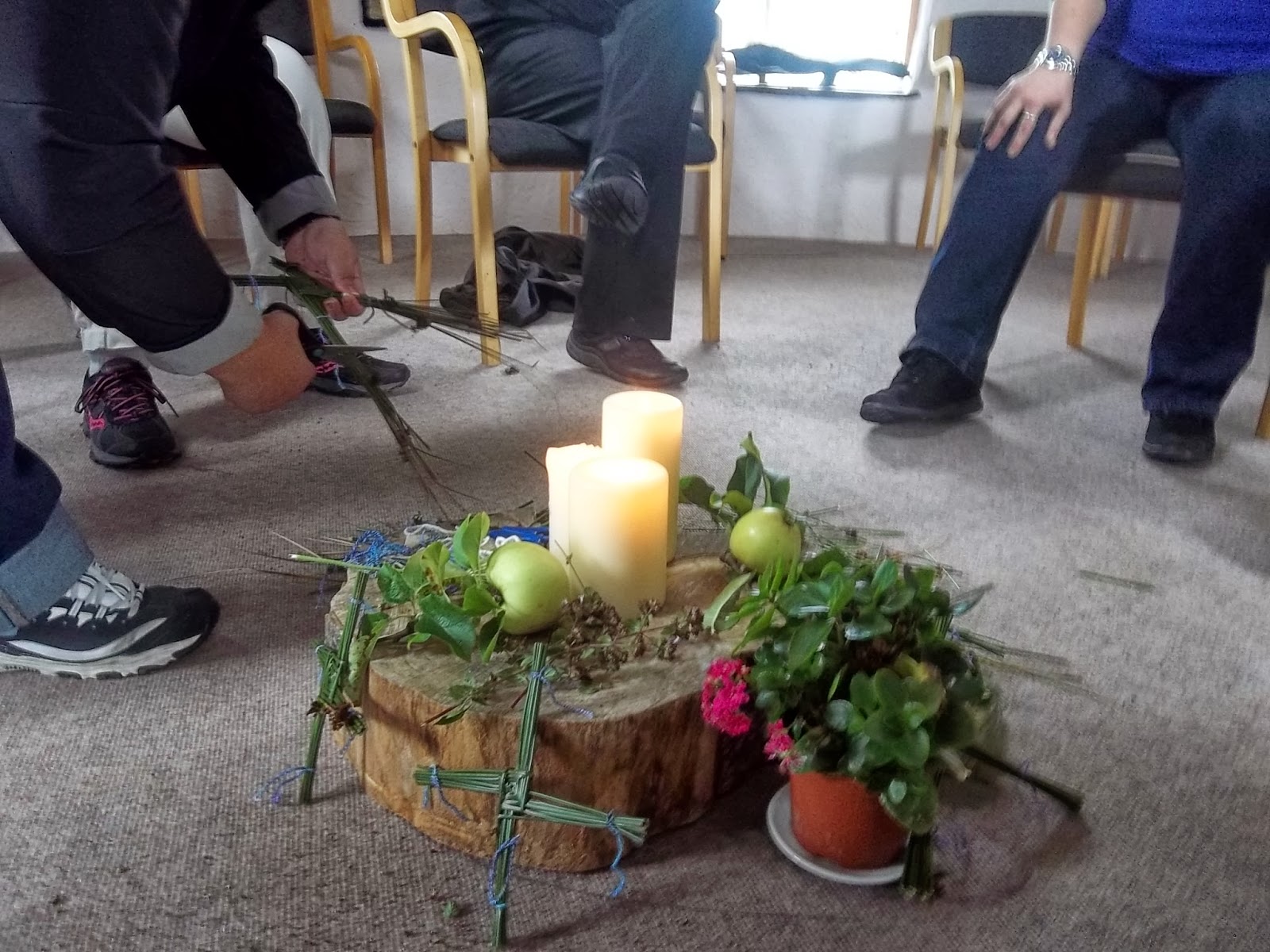
There's a place like this in Ireland that I visited recently. A place where I learned a great deal about Ireland and its Celtic past and present. And about the part the seasons and the natural world played in shaping Irish culture long ago, and how contemporary culture in Ireland can re-engage with nature and the environment to inspire new generations. The place is called Brigit's Garden. It's in the west of Ireland, near the village of Moycullen, about 20 minutes from the city of Galway. I visited Brigit's Garden with a small tour group of women the morning after most of our group arrived in Ireland from overseas. Their arrival was immediately followed by a busy afternoon walk around Galway City. Brigit's Garden turned out to be the best place to go to for recovering from a long flight and a leap into a loud, bustling city. Peaceful, lovely, imaginative, colorful--Brigit's Garden was designed as much for delighting in nature and enjoying oneself in a natural setting as for education and contemplation about the environment and Irish history. Our group enjoyed a walk around the Celtic gardens, a tea and scone break, and a special workshop on making traditional Brigid's crosses.

Cutting the ends off a Brigid's cross at Brigit's Garden

We went to Brigit's Garden because I'd wanted the group of women to learn more about Brigid, one of the 3 patron saints of Ireland and perhaps the central feminine figure in all of Irish culture and history. Everyone around the world already knows plenty about Patrick, the saint most associated with Ireland...so much so that he gets a national holiday while Brigid gets none. Brigit's Garden seemed like the perfect place for learning about Brigid--about who she was and what she's meant to the Irish people.

My group did indeed learn about Brigid, and so much more. We learned about the seasons as they were celebrated in Celtic Ireland, about the life of Brigid and her lasting influence on Irish Christianity, about the role of the "divine feminine" before Christianity in Ireland, about how Ireland's natural resources have traditionally been used in both the practical and creative arts and how they were used in designing and creating Brigit's Garden. Brigit's Garden has been open to the public since 2004, though the idea of it came to its founder, Jenny Beale, back in 1997. Jenny describes her vision for Brigit's Garden as "to create special gardens where people could reflect and relax in beautiful surroundings, and also to provide imaginative environmental education for all ages."
The plan was built according to a design by landscape designer Mary Reynolds, who incorporated traditional materials and stories with a contemporary twist into her design. The result is a place of woods and meadows, rushes and ring forts, apple trees and wishing trees, standing stones and basket swings, ancient bog oak sculptures, thyme-covered earthen mounds, a thatched roundhouse, a crannog, a giant dancing woman, a grassy sleeping woman, and a lovers' hollow encircled by wildflowers and crowned by the western Irish sky and stars.

Wishing trees in the Bealtaine (May) garden
A sculpture made of 5,000-year-old bog oak representing the flames of love in the Bealtaine garden. Bealtaine is the traditional fire festival in the Celtic calendar

In the Samhain (Winter) garden, a woman made of bronze leaves rests in the shelter of an island, awaiting her rebirth at Imbolc (Spring)
That's not a mere mound. That's the resting head of the giant sleeping woman at Brigit's Garden, snuggled on the earth in front of the thatched roundhouse for the Samhain (Winter) season

It was Jenny Beale herself who led us around the Celtic seasonal gardens, explaining to us the significance of its design. Everything in the gardens, everything on the grounds, has a story, and every story has a meaning that is reflected in its design. You could say that Brigit's Garden is a wholly organic space, in that everything in it and about it has been inspired by the places in mind where nature and culture meet. The overall story that Brigit's Garden tells is the story of Ireland and of Celtic culture, of creation and endurance, of birth, life, death, and rebirth, of constant renewal. It's only fitting that Brigit's Garden has taken a feminine figure of Irish/Celtic history for its name, as the story of Ireland that it tells has a very feminine slant to it. This is not the history book's story of Ireland--a linear, masculinist tradition of dates and decrees, and texts and timelines, heavy on the tragedies and heavy on the heroes (nearly all men of course). This is the earth's story of Ireland, a cyclical story of how the land has shaped the culture and how the culture has shaped what the land has given.

Jenny Beale explains the 3 faces of Brigit in the Imbolc (Spring) garden

For me, it's a story of Ireland that makes more sense, in that it's a story you can feel yourself fitting into, literally. Ireland's history is a very long one, and many of its traditions are very old. In many other places in Ireland that tell the story of the country, for example in many museums or folk parks, it can be easy to feel very remote and distant from what you're learning about, even if you find it interesting. There's a disconnection when looking at a document on a wall or a re-creation beyond a barrier or an artifact behind plated glass. (And forget about the silliness of seeing actors in costumes wandering around old-timey-looking villages.) At Brigit's Garden you walk amongst the stories and are invited to interact with the design and displays as if you were walking across your own backyard. You can pick one of the pears or apples, swing in the baskets, seat yourself on the ancient bog oak throne, run down the aisle of standing stones, brush your hands over the beds of herbs and take the smells of the garden with you, gather rushes for a Brigid's cross, leave a wish on the wishing trees, lie in Diarmuid and Grainne's (uncharacteristically) grassy bed. You can come back at different times, different seasons, and see how the gardens change and take on new meanings with each visit. No matter when you visit, you leave a place like this feeling calm and connected.

A wayfaring woman claims her place at the bog oak and yew throne and hearth in the Bealtaine garden
A wishing tree and the grassy hollow where lies the bed for the mythical lovers Diarmuid and Grainne

It's a magical place. And the world needs more places like it. Even Chicago, for all its impressive parks and well-planned gardens, could do with its own sort of Brigit's Garden. Perhaps a place that tells the story of Chicago and its connection to the heartland, a place designed with equal parts big-city gusto and Second-City humor, a place of prairie flowers, cowtown roots, lake breezes, and concrete sculpture. What would a place dedicated to the Chicago life-cycle look like? Or is the whole city itself the place I'm looking for, the place of vision, the urbs in horto come to life? Maybe I need to simply look at my hometown with new eyes, with eyes refreshed by the vision that inspired Brigit's Garden. I would love to feel as connected to the city of my birth and the land that shaped it as I did in lovely Brigit's Garden way across the Atlantic Sea.

Wednesday, October 2, 2013

Wayfaring Women Go To Ireland

I'll be putting up a couple new posts very soon. But I just wanted to post something inviting people to check out pictures from my recent tour of Ireland with my company, Wayfaring Women Tours.

We had 6 cool lady travelers and myself spending 9 days touring the counties of Galway, Clare, Kerry, and Cork in late August and early September. We had great weather almost all the way, especially while visiting the show-stopping Cliffs of Moher and Dingle Peninsula. We also had great times at the lovely and peaceful Brigit's Garden (where we learned how to make Brigid's crosses and enjoyed a meditation with Jenny Beale) and the Ballymaloe Cookery School (where we met Darina Allen, had a tour of the grounds and organic vegetable garden, and were treated to a fun baking lesson on Irish breads, scones, and more with Debbie Shaw).
The Cliffs of Moher, County Clare

Speaking of Ballymaloe, we had some delicious meals at beautiful Ballymaloe House and the award-winning Wild Honey Inn. In Dingle, some of us even started the day with a decadent bowl of Drambuie-flavored porridge at our great guesthouse owned by the Heaton family! We risked our lives crossing from Doolin to Inis Oírr on the Happy Hooker ferry--but it was all worth it for the gorgeous Aran jumpers on sale at Dara O'Conaola's craft shop and the delightful walking tour and talk we had with Cathleen Ní Chonghaile, who told us all about the unique crafts made on the Aran Islands. We also found ourselves enjoying modern Irish poetry movingly recited to us by Tony Kirby of Heart of Burren Walks, in the midst of the secluded and special St. Colman's Hermitage in the Burren. And we got the inside scoop on Galway City from guide and local man Conor Riordan, who even passed on a few tidbits about student life in Galway as he showed us the campus of his alma mater, NUIG.

Best of all, we had a man named John Donovan taking us everywhere we went, on one of the most comfortable coaches in the world, supplied by Butlers Buses of Cobh, County Cork. John was a fantastic guide and driver who cheered on the sun's appearance every morning, sang to us on long stretches of the Irish roadways, and converted us all to Rebel fans by the journey's end.

Our group at Ballymaloe House in County Cork

There's much more, but I'll shut up here finally and let you see for yourself. You can check out pics from our visits to Galway and Clare on the Wayfaring Women Tours Facebook page here. (You don't even have to have a Facebook account to see the pics!) Our journey through Kerry and Cork can be seen here. If you like what you see, you can even like our Facebook page and show your support.

Two wayfaring women at the Dingle Peninsula, County Kerry

Friday, March 22, 2013

Farewell To Frommer's Guidebooks

If you're both a bookworm and a travel...worm(?), you probably already heard the news. Yesterday it was announced that Frommer's, a travel guidebook publisher that's been in business since 1957, will no longer be publishing print editions of their guides. From now on, it's all digital in the world according to Arthur Frommer, the veteran travel writer who began with The GI's Guide to Traveling Europe a couple years before publishing the first official offering in the Frommer's series, Europe on $5 a Day.

Even without ever picking up a Frommer's guide or having heard of the series, you can easily gather from that initial title that Frommer's specializes in budget-conscious travel advice. Though over the years the boast of $5 a day would creep up to $20 to $45 to $90 a day (and the "on" in the title would sneakily morph into a "from": Frommer's Italy from $90 a Day), after which point the series faced financial realities and just started titling them "day by day," leaving the penny-pinching up to you (Frommer's France Day by Day). A magazine called Budget Travel (still in publication) would join the Frommer's brand and, as with most publishers, so would a website with pretty much all the information you could find in the guidebooks as well as a travel blog written by Arthur Frommer himself.

The decision to stop printing guides really comes as no surprise, regardless of whether you have any insider knowledge of the travel industry or the publishing industry. It's just the way publishing has been going for a long while now. Everybody can probably think of at least one example of some publication or other that you used to be able to hold in your hand and crack open the covers or flip the pages of that you just can't anymore, simply because they don't make 'em like they used to. I used to work in publishing. Encyclopaedia Britannica, the company I worked at longest--and that had existed a full 240 years before I even pushed a few editorial pencils and marked up a few manuscripts there--made a big announcement last year that it would no longer be printing encyclopedia sets. It was something I'd say most of the company's employees and former employees and anyone who'd ever worked for a publishing company for that matter could probably see coming--yet it made world headlines (both digital and print kind) and it was hard not to feel some loss and shock, even for those of us who set down our red editorial pencils and closed the cover of the company style manual years ago.  

These days, as a part-time traveler/full-time travel dreamer/once-upon-a-time copy editor, I admit I get a lot of my info and advice online. A lot of it--but by no means all. I still buy and read actual travel guidebooks. And I still rely on guidebooks when I travel--much more so than any current or new technological device. In fact I probably rely on guidebooks exclusively for info and advice while I'm on the road--as I generally don't bring along my cell phone (it's a cheap one anyway with no apps whatsoever that I don't even know how to upload or install or use or whatever you call it) or laptop (it's too heavy and I'd be afraid to lose or damage it). Even when I've resorted to printing out articles or maps from online sources while preparing to go somewhere, note that I'm still relying on the good old-fashioned technology of print, of actual, physical pages that you hold in your hand, fold up in your pocket, spill food and drink on, scribble in the margins or on the backs of, tear up in fits of traveler's frustration or panic, use as toilet paper in emergency situations (uh-huh, you heard me...and fellow travelers, you know what I'm talking about), and about a thousand other actions.

As for which brand of guidebook I rely on, I'm not married to any particular brand. I usually flip through a few different brands on the same destination whenever I'm planning a trip before deciding if I want to buy one and which one. Sometimes it's size and weight that make the decision for me. Sometimes it's organizational style--things like good indexing, useful general info grouped together at the beginning or end of the book, color fold-out maps at the beginning or end with more detailed maps placed often throughout the book. Sometimes it's content--more advice and consideration than average for female travelers' concerns, more info on a lesser-known place or sight I'm planning on visiting, more history. Sometimes it's writing quality--does the text sound like it's been written by some stoned 20-year-old backpacker dude or a detail-obsessed architecture zealot or a cranky xenophobe or what? Budget almost always plays a big part in my choice of guidebook. If a guidebook lists no hostel options, it's out of my league. Sad fact. Hostels, B&Bs, budget motels, lunch cafes, sandwich shops, whereabouts of grocery stores, free days at museums, work-exchange options, local public transit stations, public restroom locations--these are the kind of deadbeat, er, I mean pennywise listings that speak to me. Conversely, the more a guidebook gives space to car rental and valet services, Zagat restaurant ratings, exclusive spa and salon getaways, high-end shopping recommendations, directions to high-rise rooftop nightclubs with swimming pools, and helicopter tour options, the more I know it's not meant for me. I don't think such guidebooks are even aware travelers like me exist much less share the world's roads with their kind of target tourists.

A woman with suitcase. Edward Dimsdale - Road, East of England, Autumn, 1997

Being budget-conscious has usually meant I lean towards brands such as Lonely Planet, Let's Go, and Rough Guide. These brands are also better suited towards younger and solo travelers in my opinion. Their recommendations have certainly saved me a lot of money, and I've probably been able to travel farther, to literally get more mileage out of my dollars, with these brands than I would have with the advice of brands like Fodor's. I admit the budget brands of travel guides have also misled to me to the occasional forget-rustic-this-is-just-downright-scuzzy accommodation or eating place. I once heard a genuinely intrepid and fearless young female backpacker make a similar complaint about the Footprint guides, which I've seen but have never used.

Where do Frommer's guides fit in with all this? Frommer's has always been decidedly budget-conscious but with a step in the direction of comfort, cleanliness, and class-consciousness. A fair bit closer to Fodor's than to the Lonely Planet variety, a forerunner to Rick Steves if anything. For enthusiastic, adventurous, and frugal travelers, yes, but specifically for those who long outgrew the "charm" of sleeping in a dorm with a bunch of strangers or washing their clothes in the sink or shower (and using the complimentary soap and shampoo samples) to save on hotel laundry charges.

I think it was for this reason, as well as the brand's reputation for unpretentious yet good-quality writing, that I chose a Frommer's guide when I purchased my very first travel guidebook. It was in 1994, the year I first went to Ireland. I was 21, a student, and working as a store girl in a local Polish bakery for something like $5.50 to $6 an hour. My previous occupations up until this time had been an usher and candy seller at a movie theater and a book checker-inner and sorter at a library. You can see why I might have been drawn in by the promise on the Frommer's cover: Ireland on $40 a Day. In truth, I think I managed on a third of that--mainly by eating a full breakfast in the morning, which tied me over for hours, then drinking a bottle of Coke or a small carton of milk really fast for "lunch" (drinking fast, in a few gulps, tricks you into feeling full), and for dinner eating the 6 scones I had gotten for a pound in the Moore Street Market in Dublin--one scone per day, sometimes two if I hadn't managed the full breakfast in the morning. I ate the scones dry--no butter, no jam, no nothing. The older they got, the more they crumbled--but just as long as they didn't turn green. I remember eating one in St. Stephen's Green in Dublin and one on Inishmore, the crumbs falling all over the little patch of grass I had staked out in some field where I'd knocked over my rented bike and climbed over a wall to hide from the road. (Even though no one knew me in all of Ireland and so no one cared, I remember feeling I had to eat on the sly, like it was a vulgar thing to do outside of any restaurant--where I felt too awkward as a young foreign girl sitting by myself--and like it was something to be ashamed of that I was basically just consuming scones, milk, and Coke on my vacation.)

My first job was at a movie theater at age 17. I was always dreaming. New York Movie, 1939, Edward Hopper

I cut corners in tons of ways that first trip outside my country. I wanted to supplement a reasonable but still somewhat costly for me tour I took for part of my trip. Taking a tour had been something of a compromise to easy my parents' worries about me being all alone in a foreign country for a couple weeks. I think choosing the Frommer's guide may have been a bit of a compromise as well--in the sense that while it suited my budget tastes, it was maybe meant for a more mature and secure traveler. By using the Frommer's guide at that very inexperienced stage in my life, I was being thrifty but also perhaps trying to make up for my inexperience with the security that came from following the decidedly sensible advice and middle-class recommendations of Frommer's well-respected and well-traveled writers. You might say that my Frommer's book served not only as a guide but also as a guard--likely steering me away from some of the edgier places and more reckless fun I might have gotten myself into had I taken a Lonely Planet guide along with me. (Or maybe it made no difference whatsoever. I did hitchhike during that first visit in Ireland after all. But just once. And just for maybe 5 miles. And I kept my hand on the passenger door handle the whole time and sprung out of the car and ran the second the driver stopped at my destination--just to be safe. I am a proper product of a Midwestern suburban upbringing, people.)

I've only hitch-hiked twice in my life. Pic ource: Jeremy and Claire Weiss: http://www.day19.com/

I know I still have my first Frommer's guide somewhere--packed away in boxes ever since I moved out of my Chicago apartment and essentially gave up a permanent address of my own for awhile to travel at length. It's a pretty tattered copy. Far more so than any of the guidebooks I've used since. It's well marked up with pages torn out and then shoved back in from those times I just wanted to carry one of the city maps around rather than the whole book. In many ways it's as much proof of my travel credentials as a stamped-up passport. Arthur Frommer would probably love the tattered sight of it--the wreck of it much more potent evidence of the good use I got out of it than a million personal hits on his website could ever be. It's like the difference between a battered suitcase and a brand new credit card. Both got you around the world. But while one's all about the money, the other's all about the journey...and has the scars to prove it. I'm hanging onto my old Frommer's and all my old guidebooks--and I'll keep buying them as long as someone's printing them. I'd no sooner be satisfied with digital-only reading than I would be with virtual traveling, with a paperless world than a roadless one.