Showing posts with label women's tours. Show all posts

Thursday, April 9, 2015

Baking At Ballymaloe

Debbie Shaw teaching a baking course at Ballymaloe Cookery School, in Co. Cork, Ireland.
This picture was taken in September 2013 at a famous cooking school in the southern tip of Ireland. The school is called Ballymaloe, located in County Cork, and the woman teaching in the photo is named Debbie Shaw. All those goodies you see in the foreground of the picture were made by her during the course of the lesson: soda bread, scones, focaccia, lemon poppyseed cupcakes, and sponge cake with lemon curd and raspberry filling. This course was part of a women's tour I organized for my former tour company, Wayfaring Women Tours. This was actually the penultimate day of the tour, which lasted 9 days and took us from Galway City, around Connemara, to the Burren and the Aran Islands, down to Dingle and through County Kerry, across Cork to Ballymaloe and Blarney. Our time at Ballymaloe also included an overnight stay in the truly beautiful country home (called Ballymaloe House) and dinner at the house. Ballymaloe was one of the definite highlights of the entire tour.

I included a visit to Ballymaloe, both the cooking school and the country home, on the tour not only because I knew it would be a great time, but also because I wanted the guests on the tour to come away from their time in Ireland with a positive view of Irish food, cooking, baking, and eating. Ballymaloe is famous in Ireland (and throughout Europe) for changing the notion of Irish cooking as being bland, boring, uninspired, and unhealthy. What Myrtle Allen, who opened Ballymaloe House in 1963, did down in County Cork over 50 years ago was effectively start a revolution. At Ballymaloe, emphasis was placed on using local ingredients and "growing your own" vegetables and products as well as embracing traditional recipes and country skills (from cheese making to home brewing to baking your own bread). All the members of the tour got a chance after the lesson to make their own scones and cakes in the Ballymaloe kitchen and got recipes to take home with them. Needless to say, we had a great time. That's me showing up one of my magnificences below. ;-) You can read more about our time at Ballymaloe and about the school and house in general, and view more pics, at this old post of mine: The Ballymaloe Revolution. I absolutely recommend a visit to Ballymaloe--the school, the house, the restaurant, even just the gift shops--for anyone visiting Ireland or County Cork. 

Fringe.

Friday, September 12, 2014

Just About A Year Ago


This picture was taken about a year ago, September 2013, on the Dingle Peninsula in County Kerry, Ireland. It was on the women's tour I led for my old travel company. We'd been lucking out with the weather on the tour, but it was especially important that we have a good day for the full day we were to spend touring the Dingle Peninsula. And we got it. These two ladies were both from Seattle. Carol and Kathy. One is Japanese American, born and raised in Hawaii. The other is Native American, born and raised on a reservation in Washington state. They were great travelers and a lot of fun. Neither had been to Ireland before, and one of them had never been out of the U.S. I'm glad they had a beautiful day to spend in Kerry.

Sunday, November 10, 2013

The Ballymaloe Revolution

Wayfaring Women tour group in front of Ballymaloe House, Sept. 2013

When I tell people in the U.S. that I miss Irish cooking, I always get a laugh. And when I visit friends in Ireland, they're always trying to steer me to Thai restaurants and tapas bars or make home-cooked meals for me featuring curry or pasta or tortillas or some such imported specialty. No matter how much I tell them I'm excited to be back in the country, where I can have the traditional Irish foods I've been missing, they don't seem convinced. Irish cooking has had a poor reputation around the globe for too long a time I suppose, and maybe even many locals still figure that the fight to prove otherwise is a lost cause. 

But Irish cooking is far from a lost cause. In fact it's a winning one. Any regular visitor to the country over the last two or three decades, like me, can tell you so. Likewise with anyone who's ever visited Ballymaloe in Shanagarry, County Cork. There are two Ballymaloes, and here I mean both of them--Ballymaloe House, the country home and restaurant first opened to the public in 1964 by Myrtle and Ivan Allen, and Ballymaloe Cookery School, begun in 1983 by the Allens' daughter-in-law Darina Allen and her brother Rory O'Connell.

Debbie Shaw teaches a baking course at Ballymaloe Cookery School. Check out the assortment of baked goodies: soda bread, scones, focaccia, lemon poppyseed cupcakes, and sponge cake with lemon curd and raspberry filling.
View of the front grounds from one of the guest rooms at Ballymaloe House.

Clearly, Ballymaloe is a family affair. It's also an empire largely powered by women, from Myrtle to Darina to Rachel Allen, Darina's daughter-in-law and the latest cookery celebrity to emerge from Ballymaloe. The influence these three women have had and continue to have on modern Irish cooking cannot be overstated. Their lifework is a large part of the reason for the turnaround in Irish cooking's reputation in recent years. A recent television special in Ireland on Myrtle Allen clarified as much. Long before the establishment of the Slow Food Movement or farmers' markets in Ireland, Myrtle practiced and championed an approach to cooking that would form the basis for slow food methods. Meanwhile, it was Darina Allen who spearheaded the Slow Food Movement and the founding of farmers' markets in Ireland. In more recent years, Rachel Allen has become the new face of Ballymaloe, a popular and ubiquitous host of Irish cooking programs and author of Irish cookbooks and food columns.

The Ballymaloe recipe for good food and good cooking is really simple and straightforward. Use fresh, locally sourced ingredients. Make meals from scratch as much as possible. Grow your own. And if you can't, then buy from local and ethical suppliers--local fishermen, farmers, bakers, gardeners, butchers, cheese makers, brewers...you get the drift. Reclaim some of the skills your country grandmother may have lived by, such as making your own butter or jam or baking your own bread or raising your own hens or pigs or cows...or simply growing your own herbs on the window ledge of your city apartment.

Pumpkin patch outside the glass house at Ballymaloe Cookery School
Cabbages and flowers growing at Ballymaloe Cookery School
Tomatoes grow on vines in the glass house at Ballymaloe Cookery School. The school grows and raises all the ingredients used in its cookery courses and served in its cafe.
Ballymaloe even raises its own animals on a farm on the school grounds.

Of course, not everyone has a country grandmother to learn from. And for a long time in the 20th century in Ireland (and going into the 21st), country ways were viewed by many as a way of life to abandon and even be ashamed of. Rural life in Ireland was often stereotyped as backwards and associated with poverty and oppression. Even when romanticized, there was still a stigma of poverty attached to country life and a sense that any attempts to reclaim or revive the culture of the countryside were probably a lost cause. In terms of the role of food and cooking in rural Irish life, it must be remembered that one of the most significant events in Ireland's long history was a series of potato crop failures that spiraled into the Famine of the mid-19th century. The Famine caused at least a million deaths in Ireland and drove another 2 million Irish out of the country to North America, Britain, the European Continent, Australia, and beyond in the late 1840s alone. The great majority of these people who died or emigrated during the Famine were country people, the rural Irish, the life blood of traditional Gaelic culture and Gaelic ways. At the same time as this massive hemorrhage of life throughout the Irish countryside, large volumes of food were inexplicably and unconscionably being exported from Ireland to Great Britain for commerce. Rural Ireland never really recovered from this horrific time, not even to this day, certainly not population-wise. Since the 1840s, emigration has been the one tradition of country life in Ireland that has never disappeared, never needed reviving.

I include this little history lesson because I think you can't fully understand how revolutionary the Ballymaloe approach to Irish cooking and food was until you understand the against-all-odds experience of the rural Irish and the difficulties in presenting Irish country skills in a positive light, much less in reviving them. At the time Ballymaloe House first opened to the public in the 1960s, the culture to emulate in the hospitality industry was French, not Irish. You wanted to learn how to cook or just to eat well, you went to France--not to an isolated farm and old home in a tiny village like Shanagarry in County Cork. The idea that the best in food and hospitality could come from an Irish housewife using locally grown, raised, and made ingredients (rather than importing products from France or Britain or from anywhere outside Ireland) would have been laughable to many self-proclaimed foodies back in the 60s and 70s. What did the Irish know about cooking? What did an Irish housewife know about hospitality?

Inside one of the lovely guest rooms at Ballymaloe House
The Top Room at Ballymaloe House

Quite a bit as it turned out. The Irish have long been known for their hospitality--it's been a vital practice in Irish culture going back to pre-Christian times. Meanwhile, Myrtle Allen had the sense to simply work with what she had and what she knew to make good meals first and a comfortable home away from home later for guests at Ballymaloe.

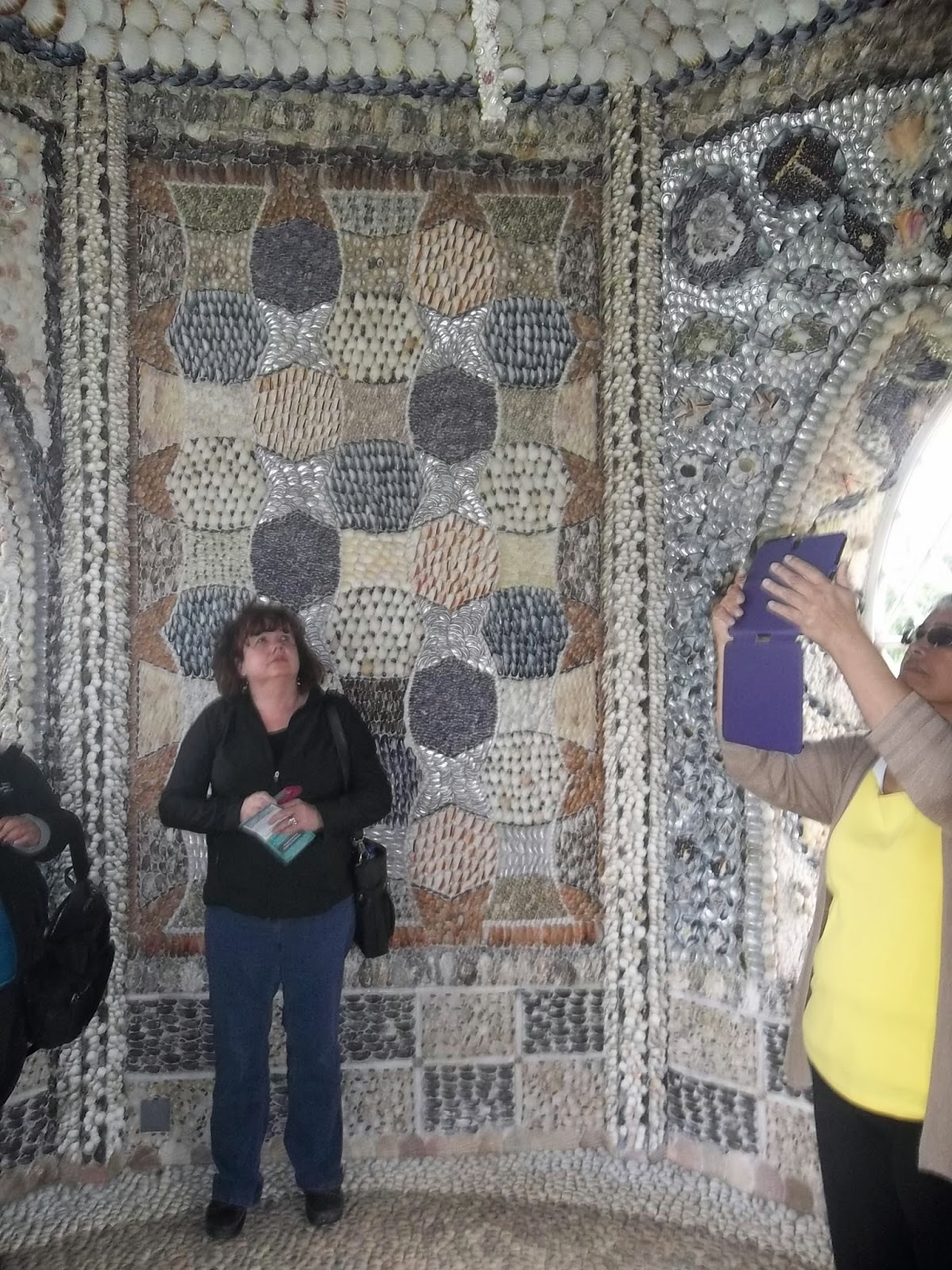
Today, Ballymaloe is internationally renowned as one of the best guesthouses and finest cooking schools in Europe. It has produced some of Ireland's best chefs and cooks, who in turn have gone on to change the nature and reputation of Irish cooking throughout Ireland and beyond for the better. Guests come to Ballymaloe House for a country Irish experience that is both luxurious and genuinely friendly, and students come to Ballymaloe Cookery School to master everything from how to make sushi to how to make a loaf of classic Irish soda bread. At the house, guests stay and eat in the same rooms where Myrtle raised her family; at the school, students learn to forage food from the same surrounding countryside where Myrtle gathered ingredients for her home-cooked meals. Beyond the house are acres of fields and grounds that include a tennis court, swimming pool, croquet set, and wooded walkways. Beyond the school are formal gardens, a glasshouse where vegetables are grown, a Celtic maze, a giant chess set, and an amazing little house with an interior made entirely of shells.

The Herb Garden at Ballymaloe Cookery School
Looking down path through the Herbaceous Border to the Shell House at Ballymaloe
The Herbaceous Border garden at Ballymaloe Cookery School

Inside the Shell House
Detail of shell work inside the Shell House

I had the privilege of staying at Ballymaloe House and taking an afternoon baking course with a tour of the grounds at Ballymaloe Cookery School this fall with a group for my tour company, Wayfaring Women Tours. For many women on the tour, Ballymaloe was their favorite experience of their time in Ireland. We were treated well at both the house and the school and had a great time in our course and enjoyed a delicious dinner. We learned how to make savory scones and Irish brown bread, with insider tips on "letting the fairies out" and "using the claw." We drank refreshing elderflower cordial and decorated cupcakes in Cork colors (in honor of our wonderful Cobh-born-and-bred tour driver, John) and made lemon curd (which was also turned over to John in gratitude). In our guest rooms we found everyone had her own fluffy white robe, glass bottles of Ballymaloe spring water, and little gifts of Ballymaloe relish and Voya bath products.

Our savory scone creations at Ballymaloe
More of our Ballymaloe masterpieces: pizza bread made from a basic soda bread base, lemon curd, and a sponge cake with strawberries and cream

The bright and colorful cafe and course room in Ballymaloe Cookery School
When I started my tour of Ireland, some of my group remained convinced that Irish cooking was all about overboiled vegetables. They didn't think they came to Ireland for the cooking. By the tour's end, I think I managed to change their minds. Or more accurately, I think Ballymaloe changed their minds. Ballymaloe and the three mighty Irishwomen who've steered it to such success: the Allen women, Myrtle, Darina, and Rachel.

Wednesday, October 9, 2013

Concrete and Celtic Seasons: Two Gardens

I come from a place where the official motto is Urbs in horto...City in a garden. In Chicago terms, that's translated into an extensive public parks system (pretty much one for every neighborhood with several large-scale parks "anchoring" the city's downtown and north, south, and west sides) and miles and miles of beaches and lakefront. You might also add to the Urbs in horto vision that giant lake called Michigan which borders Chicago--even though the lake was here long before the city was a dream in any pioneer or planner's mind. You should also include the Chicago River, the multiple smaller lakes and rivers that bound the Chicago area, the remnants of original prairie and native flowers that have been fiercely reclaimed and preserved, and all the wildlife that you find in and around the city--from our urban coyotes to our summer fireflies to our ubiquitous suburban squirrels, raccoons, possums, skunks, bats, bunnies, foxes, and family pets.

Skyscrapers of Chicago viewed from prairie wildflower garden in Lincoln Park
That's a lot of nature. Much more than folks around the world who've never been to Chicago likely realize. It's not quite the concrete jungle and gangster playground non-Chicagoans imagine it to be.

Graffiti in alley in Lincoln Square, Chicago
I mention all this because I was gonna begin this post with some cliches about how "we" (whoever that is) tend to forget, ignore, or take for granted the cycles of nature and life that surround us in this comfort and technology-worshiping day and age. I suppose by "we" I was thinking of people who live in urban and suburban areas in developed countries. Not that I buy into the notion that city or suburban people are disconnected from nature, but I've known a few gloomy, judgmental types who've tried to sell such a notion to me. I've been told by these sad folks that I come from an "artificial" culture and country--plastic, corporate, materialistic, sterile, yada yada--and I'm guessing the evidence for this lies in Americans' appreciation for stuff like air conditioning and grocery stores and life-saving vaccines and antibiotics and roomy cars. I wonder would it matter to the folks who have such a low opinion of the place I come from (whether they're talking the U.S. or Chicago or suburbia) that while I write this I sit in a coffee shop, yes, corporate-owned, with a parking lot full of cars...that's well interspersed with trees full of leaves newly and vibrantly colored by the changing of summer into fall as well as half a dozen plots of wildflowers? Does it matter that right across the street is a farmers' market bustling with suburbanites stocking up on late-summer and early-fall fruits and vegetables, home-made pies, jams, and hummuses, and locally raised and butchered meats? It's a market held every Sunday from late spring to late fall, and if you miss this one there are other farmers' markets on every and any day of the week in nearly every suburb and neighborhood in Chicago--including downtown, right smack dab in the middle of all the skyscrapers. Hell, they even grow and hawk vegetables on top of the buildings in downtown Chicago. Meanwhile, last night I witnessed a stand-off between a skunk and a raccoon in my backyard, and later tonight as I finish this post I'll write to the song of crickets and cicadas that drown out the hum of late-night traffic and freight trains that run through my town. So much for the picture of a plastic and artificial American landscape.
Summer gardens in Lincoln Park, Chicago

The city in a garden? In the courtyard at the Fourth Presbyterian Church on Michigan Avenue in downtown Chicago

Yes, this part of the American landscape, Chicago, is a big, brawling city of crime and corruption and corporations...and a Midwestern city of farmers' markets and bountiful local food and green spaces and four kinds of seasons and all the fine and fierce weather that comes with them. A heartland city. Once upon a time, not that long ago, this city was the nation's hub for everything a farmer could raise and sell and grow and mine in the U.S. Everything that came into this city went back out to everywhere else in the country. Chicago, like nature, worked year-round to keep the exchange going, the cycle turning--but it roared loudest and throbbed strongest during the harvest season. Years ago, the stockyards and many of the original transport systems in Chicago that were supported by this national exchange of nature's bounty were demolished or dismantled and erased from the city's landscape. The city was "cleaned up," prettified. But the cycle continues in new forms of exchange and transport, as well as new forms of expression and appreciation, such as the ubiquitous farmers' markets and parks and the city's experiments in high-rise and restaurant rooftop gardens. This is not a city that tries to hide its middle American cowtown roots--in fact it wears its mucky, Midwestern roots on its sleeve, lets the world see how a heartland town can thrive and succeed and support a nation, leaves its roots to spread and anchor all forms of industry and creativity in the city, and keeps coming back, keeps surviving and evolving, even as other once-great Midwestern cities and former cowtowns fall into bankruptcy and misguided scrambles at revisionism and reinvention.


Beaches of Chicago's north side viewed from the Hancock Building

Bridge over the Chicago River in downtown Chicago
I wish people outside Chicago, and outside the U.S., understood this better. I wish they knew how important, special, and amazing Chicago is. I wish as I traveled I got less people asking me questions like if we eat or have access to fresh vegetables where I come from or if I ever swam in a natural body of water before traveling to a seacoast. I wish the world knew more about Chicago's garden-city roots and less about its gun-violence rates. Not that Chicago and the world should ignore the city's problems any more than is already the case. I just wish there could be a more balanced view, one that reflects the daily life and connections to both nature and culture that Chicagoans--and Illinoisans and Midwesterners--of all backgrounds cultivate and enjoy. People in the poor neighborhoods in Chicago appreciate when the sun is bright and the sky is blue and feel the changing of the seasons, just as people in the wealthy neighborhoods do. People in the "sterile" suburbs hit the beaches in the summer, go to farmers' markets and orchards in the fall, build snowmen in the winter, fall in love in the spring. So do people on the "gritty" south side. We all contribute and we are all connected--it's the Chicago way. The genuine Chicago way. Don't let anyone convince you different.

Maybe what Chicago needs to clarify its vital importance and deep connection to the American landscape and environment is some place where people can see just how it all works, how it all comes together. Another park maybe, another garden, that locals and tourists alike can visit to learn about the Chicago life-cycle. Some place designed by someone who cares equally about the city's nature and culture, and who can figure out how the two meet and make the city (and the U.S.) what it is today. Some place with beauty and a sense of humor, a good dose of whimsy as well as wisdom, and an inclusive and friendly spirit.

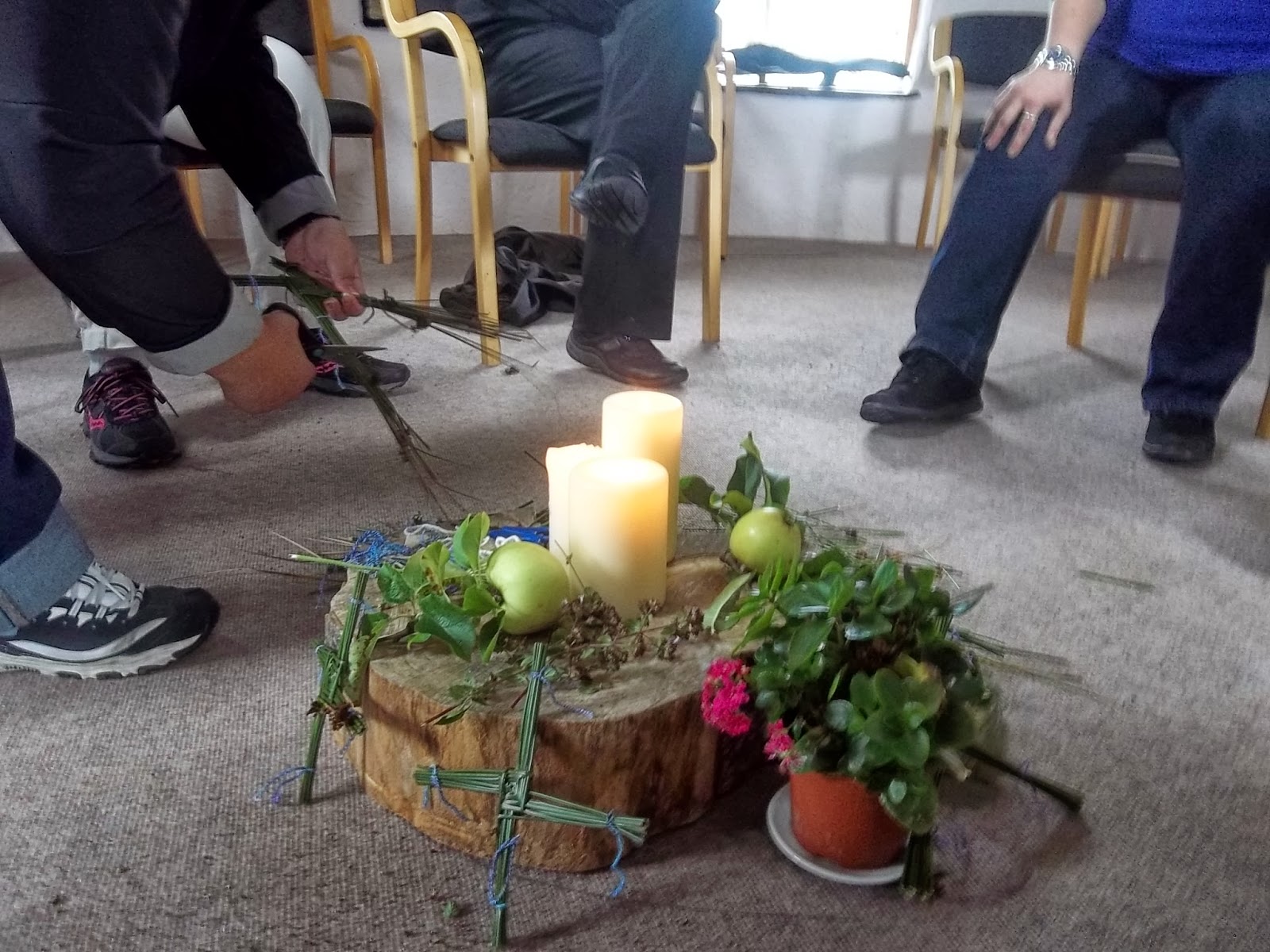
There's a place like this in Ireland that I visited recently. A place where I learned a great deal about Ireland and its Celtic past and present. And about the part the seasons and the natural world played in shaping Irish culture long ago, and how contemporary culture in Ireland can re-engage with nature and the environment to inspire new generations. The place is called Brigit's Garden. It's in the west of Ireland, near the village of Moycullen, about 20 minutes from the city of Galway. I visited Brigit's Garden with a small tour group of women the morning after most of our group arrived in Ireland from overseas. Their arrival was immediately followed by a busy afternoon walk around Galway City. Brigit's Garden turned out to be the best place to go to for recovering from a long flight and a leap into a loud, bustling city. Peaceful, lovely, imaginative, colorful--Brigit's Garden was designed as much for delighting in nature and enjoying oneself in a natural setting as for education and contemplation about the environment and Irish history. Our group enjoyed a walk around the Celtic gardens, a tea and scone break, and a special workshop on making traditional Brigid's crosses.

Cutting the ends off a Brigid's cross at Brigit's Garden

We went to Brigit's Garden because I'd wanted the group of women to learn more about Brigid, one of the 3 patron saints of Ireland and perhaps the central feminine figure in all of Irish culture and history. Everyone around the world already knows plenty about Patrick, the saint most associated with Ireland...so much so that he gets a national holiday while Brigid gets none. Brigit's Garden seemed like the perfect place for learning about Brigid--about who she was and what she's meant to the Irish people.

My group did indeed learn about Brigid, and so much more. We learned about the seasons as they were celebrated in Celtic Ireland, about the life of Brigid and her lasting influence on Irish Christianity, about the role of the "divine feminine" before Christianity in Ireland, about how Ireland's natural resources have traditionally been used in both the practical and creative arts and how they were used in designing and creating Brigit's Garden. Brigit's Garden has been open to the public since 2004, though the idea of it came to its founder, Jenny Beale, back in 1997. Jenny describes her vision for Brigit's Garden as "to create special gardens where people could reflect and relax in beautiful surroundings, and also to provide imaginative environmental education for all ages."
The plan was built according to a design by landscape designer Mary Reynolds, who incorporated traditional materials and stories with a contemporary twist into her design. The result is a place of woods and meadows, rushes and ring forts, apple trees and wishing trees, standing stones and basket swings, ancient bog oak sculptures, thyme-covered earthen mounds, a thatched roundhouse, a crannog, a giant dancing woman, a grassy sleeping woman, and a lovers' hollow encircled by wildflowers and crowned by the western Irish sky and stars.

Wishing trees in the Bealtaine (May) garden
A sculpture made of 5,000-year-old bog oak representing the flames of love in the Bealtaine garden. Bealtaine is the traditional fire festival in the Celtic calendar

In the Samhain (Winter) garden, a woman made of bronze leaves rests in the shelter of an island, awaiting her rebirth at Imbolc (Spring)
That's not a mere mound. That's the resting head of the giant sleeping woman at Brigit's Garden, snuggled on the earth in front of the thatched roundhouse for the Samhain (Winter) season

It was Jenny Beale herself who led us around the Celtic seasonal gardens, explaining to us the significance of its design. Everything in the gardens, everything on the grounds, has a story, and every story has a meaning that is reflected in its design. You could say that Brigit's Garden is a wholly organic space, in that everything in it and about it has been inspired by the places in mind where nature and culture meet. The overall story that Brigit's Garden tells is the story of Ireland and of Celtic culture, of creation and endurance, of birth, life, death, and rebirth, of constant renewal. It's only fitting that Brigit's Garden has taken a feminine figure of Irish/Celtic history for its name, as the story of Ireland that it tells has a very feminine slant to it. This is not the history book's story of Ireland--a linear, masculinist tradition of dates and decrees, and texts and timelines, heavy on the tragedies and heavy on the heroes (nearly all men of course). This is the earth's story of Ireland, a cyclical story of how the land has shaped the culture and how the culture has shaped what the land has given.

Jenny Beale explains the 3 faces of Brigit in the Imbolc (Spring) garden

For me, it's a story of Ireland that makes more sense, in that it's a story you can feel yourself fitting into, literally. Ireland's history is a very long one, and many of its traditions are very old. In many other places in Ireland that tell the story of the country, for example in many museums or folk parks, it can be easy to feel very remote and distant from what you're learning about, even if you find it interesting. There's a disconnection when looking at a document on a wall or a re-creation beyond a barrier or an artifact behind plated glass. (And forget about the silliness of seeing actors in costumes wandering around old-timey-looking villages.) At Brigit's Garden you walk amongst the stories and are invited to interact with the design and displays as if you were walking across your own backyard. You can pick one of the pears or apples, swing in the baskets, seat yourself on the ancient bog oak throne, run down the aisle of standing stones, brush your hands over the beds of herbs and take the smells of the garden with you, gather rushes for a Brigid's cross, leave a wish on the wishing trees, lie in Diarmuid and Grainne's (uncharacteristically) grassy bed. You can come back at different times, different seasons, and see how the gardens change and take on new meanings with each visit. No matter when you visit, you leave a place like this feeling calm and connected.

A wayfaring woman claims her place at the bog oak and yew throne and hearth in the Bealtaine garden
A wishing tree and the grassy hollow where lies the bed for the mythical lovers Diarmuid and Grainne

It's a magical place. And the world needs more places like it. Even Chicago, for all its impressive parks and well-planned gardens, could do with its own sort of Brigit's Garden. Perhaps a place that tells the story of Chicago and its connection to the heartland, a place designed with equal parts big-city gusto and Second-City humor, a place of prairie flowers, cowtown roots, lake breezes, and concrete sculpture. What would a place dedicated to the Chicago life-cycle look like? Or is the whole city itself the place I'm looking for, the place of vision, the urbs in horto come to life? Maybe I need to simply look at my hometown with new eyes, with eyes refreshed by the vision that inspired Brigit's Garden. I would love to feel as connected to the city of my birth and the land that shaped it as I did in lovely Brigit's Garden way across the Atlantic Sea.

Wednesday, October 2, 2013

Wayfaring Women Go To Ireland

I'll be putting up a couple new posts very soon. But I just wanted to post something inviting people to check out pictures from my recent tour of Ireland with my company, Wayfaring Women Tours.

We had 6 cool lady travelers and myself spending 9 days touring the counties of Galway, Clare, Kerry, and Cork in late August and early September. We had great weather almost all the way, especially while visiting the show-stopping Cliffs of Moher and Dingle Peninsula. We also had great times at the lovely and peaceful Brigit's Garden (where we learned how to make Brigid's crosses and enjoyed a meditation with Jenny Beale) and the Ballymaloe Cookery School (where we met Darina Allen, had a tour of the grounds and organic vegetable garden, and were treated to a fun baking lesson on Irish breads, scones, and more with Debbie Shaw).

The Cliffs of Moher, County Clare

Speaking of Ballymaloe, we had some delicious meals at beautiful Ballymaloe House and the award-winning Wild Honey Inn. In Dingle, some of us even started the day with a decadent bowl of Drambuie-flavored porridge at our great guesthouse owned by the Heaton family! We risked our lives crossing from Doolin to Inis Oírr on the Happy Hooker ferry--but it was all worth it for the gorgeous Aran jumpers on sale at Dara O'Conaola's craft shop and the delightful walking tour and talk we had with Cathleen Ní Chonghaile, who told us all about the unique crafts made on the Aran Islands. We also found ourselves enjoying modern Irish poetry movingly recited to us by Tony Kirby of Heart of Burren Walks, in the midst of the secluded and special St. Colman's Hermitage in the Burren. And we got the inside scoop on Galway City from guide and local man Conor Riordan, who even passed on a few tidbits about student life in Galway as he showed us the campus of his alma mater, NUIG.

Best of all, we had a man named John Donovan taking us everywhere we went, on one of the most comfortable coaches in the world, supplied by Butlers Buses of Cobh, County Cork. John was a fantastic guide and driver who cheered on the sun's appearance every morning, sang to us on long stretches of the Irish roadways, and converted us all to Rebel fans by the journey's end.

Our group at Ballymaloe House in County Cork

There's much more, but I'll shut up here finally and let you see for yourself. You can check out pics from our visits to Galway and Clare on the Wayfaring Women Tours Facebook page here. (You don't even have to have a Facebook account to see the pics!) Our journey through Kerry and Cork can be seen here. If you like what you see, you can even like our Facebook page and show your support.

Two wayfaring women at the Dingle Peninsula, County Kerry

Thursday, January 24, 2013

Evens & Starters

Weird title for a blog post, I know. But I just wanted to share a few links--and I didn't think "Odds & Ends" would suit the first blog post of the year.

So...a few evens and starters for you:

If you've been reading this blog since my Camino de Santiago days--or if you've found this blog by way of searching for info about the Camino--you might be interested in a couple developments by two fellow peregrinos and friends I made on the Camino in 2011.

A friend I made on my very first day of walking the Camino has just launched her own "just get me started" Camino program: The Camino Experience.

Nancy (center) with fellow peregrinas from Ireland and Canada, 2011

I met Nancy in the Orisson albergue, where I learned she was the only other American pilgrim in the joint that night...as well as making her 6th Camino journey. Since then, she's made two more pilgrimages on the Camino and has decided to help other would-be pilgrims become bona-fide peregrinos. If you're interested in walking the Camino someday, you couldn't do any better than finding out how to get started from a genuine Camino expert like Nancy. Check out her website for more information and background about Nancy.

Meanwhile another friend I made on the Camino, a photographer from South Africa who currently lives in Ireland, where she officially began her Camino journey, has just published an e-book about her pilgrimage experience. Belinda's book, titled Simple Moments on a Journey, is available for purchase for your Kindle for $9.99 at Amazon. It's a lovely, thoughtful story by a very lovely, thoughtful person. Here's also a little video with some photos from her journey that tell more about her book:


Speaking of Ireland (sort of), I wanted to give a shout out to myself (yes, I can do that--it's my blog, people) and my tour company's upcoming women's tour of Ireland in August and September this year. If you've been thinking of signing up for the tour, and if your interest in Ireland or the tour stems from digging at some Irish roots in your family tree, you should know this year is the best year to visit Ireland. Why? Because of The Gathering 2013, that's why!

The Gathering is a special and huge initiative just launched by the Irish government and Irish tourist board to welcome people of Irish heritage all over the world back to their ancestral homeland. The year-long and country-wide celebration got going on New Year's Eve in Dublin. Events celebrating Ireland's diaspora and worldwide cultural influence will be held all throughout the year, in every corner and county of Ireland, north and south. Since this is Ireland we're talking about, what this means essentially is more warm welcomes, more music sessions, more parties, more fun, more craic than ever. That's saying something.

So if you've been thinking of visiting Ireland, this year is the time to do it. And if you're a woman who's looking to travel to Ireland, Wayfaring Women Tours is the group to travel with. It's not your grandfather's Ireland you'll see with Wayfaring Women Tours--it's your grandmother's your mother's, your sister's, your daughter's, your girlfriend's, and yours, Irish roots or no Irish roots. Here's a link to some pictures of places you'll see and go on our tour from our Facebook page. 

Kylemore Abbey in County Galway

Any questions about tour, give us a call at (773) 655-9514 or email us at info@wayfaringwomentours.com.

Tuesday, November 27, 2012

Help Haiti, Win A Trip To Ireland

Connemara, Ireland
So a couple posts ago I wrote about a fundraiser to help Haiti build wells and bring clean, safe water to some communities in need there through the aid of Water.org. The fundraiser is held by a network of travel bloggers coming together under the awesome name Passports With Purpose.  

Basically, Passports With Purpose (PwP) is an annual fundraiser held by dozens of travel bloggers that aims to give back to the places that travelers visit. PwP has been around since 2008, each year raising money for a good cause and topping its goal from year to year. This year PwP's goal is to raise $100,000 for Water.org, an organization working to make clean and safe water available to all countries and populations around the world. In the wake of the earthquake that devastated Haiti in 2010--and the damage done all over again to the country during Hurricane Sandy only a few weeks ago--Water.org will be using the money raised from Passports With Purpose for building much-needed wells in two communities in Haiti.

Now there are lots of good reasons why you should consider donating to Passports With Purpose and helping out Haiti and Water.org. First, here are a few facts about water resources in the world:

  • Nearly 1 billion people lack access to safe water.
  • Two and a half billion lack access to improved sanitation.
  • More people in the world have a mobile phone than a toilet.
  • Every 20 seconds a child dies from a water-related illness--mostly children in developing countries. 
  • Because of lack of safe water and adequate sanitation, an estimated 200 million work hours are spent each day in the world collecting water...almost entirely by women. That's enough woman-power to build 28 Empire State Buildings per day.
Those are the sobering reasons to donate. But if you're a traveler, there are even more reasons. For just $10 donation to Passports With Purpose, along with helping out Haiti, you'll be automatically entered to win a travel-related prize donated by all kinds of travel companies...including the one that hosts this blog, Wayfaring Women Tours.

Wayfaring Women Tours is donating a trip to Ireland on our women's tour*** in the fall of 2013 to the Passports With Purpose project. Think of that folks--donate $10 between now and December 11th, spend next autumn in the Emerald Isle drinking Guinness, looking out at the country's 40 shades of green, munching on warm scones and wild salmon, listening to great tunes in charming old pubs...I could go on and on.

Kylemore Abbey in County Galway


Window in Quiet Man pub in Cong, Connemara, Ireland

 Here is what you win from Wayfaring Women Tours: 


Free Trip for One (1) Woman*** on the Best of the West & South Ireland Tour for Women: August 29-September 6, 2013
(9 days/8 nights)
Tour Includes
  • Nine days of touring covering Counties Galway, Clare, Kerry, and Cork
  • Accommodation for 8 nights in comfortable hotels and guesthouses, located in Galway City, Lisdoonvarna, Inis Oirr (the Aran Islands), Dingle, and Shanagarry (outside Cork City)
  • Walking tour of Galway City to see its historic pubs and churches, the Spanish Arch and Lynch’s Castle, and the home of Nora Barnacle (the woman who would become Mrs. James Joyce and inspire Bloomsday)
  • Visit to Brigit’s Garden in Moycullen with tour of gardens, tea break, and special workshop on the Brigit tradition in Celtic folklore and culture
  • Tour of Connemara, including the charming village of Clifden and picture-perfect Kylemore Abbey
  • Free night in Galway City for you to enjoy the pubs, sit in on a traditional Irish music session, stroll along the bay, venture out to nearby Salthill, whatever you fancy
  • Tour of the Burren with a relaxed walk led by Tony Kirby, Burren guide and author
  • Visit to the Cliffs of Moher, with plenty of time to take in the amazing views
  • Two nights of music, dancing, and all-around merrymaking at the world-famous annual Matchmaking Festival in Lisdoonvarna
  • Optional excursion day to Lahinch, a seaside town noted for it beaches, with opportunity to sign up for a fun surfing lesson
  • Trip to Inis Oirr, the smallest and loveliest of the Aran Islands, with ferry transport from Doolin
  • Overnight stay on Inis Oirr, with walking tour of the island led by Eoghan Poil of Aran Islands Walks and easy, engaging Irish language lesson led by Bríd Ní Chualáin of FEICIM
  • Tour of the Dingle Peninsula in County Kerry and its many archaeological sites
  • Afternoon cookery course at the famous Ballymaloe Cookery School in County Cork, focusing on scone, jam, and bread making
  • Visit to Blarney Castle and opportunity to kiss the Blarney Stone for the gift of eloquence as well as shop ‘til you drop at Blarney Woolen Mills
  • Plus: All breakfasts (8) included (full Irish), welcome dinner on first night in Galway City and farewell dinner on last night at Ballymaloe House, transportation in a roomy, comfortable coach with reclining seats, professional driver and guide, and transfers from Shannon Airport to Galway City on first day of tour and to Shannon from County Cork on last day (for guests arriving in/leaving from Shannon). Meals included: All breakfasts (8), four (4) dinners, one (1) tea break, plus tea and generous tastings during afternoon cookery course. Some drinks and all alcoholic beverages are not included and factored into price of tour.

    Dingle Peninsula, County Kerry

    Not included in price of tour: Transportation (airfare) to Ireland; airport transfers not specifically stated in itinerary (only airport transfers to/from Shannon Airport on the dates of Aug. 29 and Sept. 6 are included in price); local transportation expenses during free time on tour (i.e., taxi fares); travel insurance; meals where not stated in itinerary; personal items/shopping expenses; fees such as room service, laundry service, telephone calls, Internet use in hotels or elsewhere, etc.; entrance fees or expenses for any activities engaged during free time on tour, including optional excursions; any expenses incurred for tour members spending additional time in Ireland before or beyond tour’s start and end; tips for tour leader, driver, and local guides; passport/visa fees (for tour members arriving from outside Ireland). No refunds will be given for any unused portion of a tour by a tour member.
    This tour is for passengers age 16 and over. 
    Prize is only good for this tour, scheduled August 29-September 6, 2013.  
    ****This is a women-only tour. Should a man win this prize, he is free to gift the prize to a woman. It would certainly be a great gift!
       
So that's what you can win from us at Wayfaring Women Tours and Writing and Wayfaring if you donate. Now here's how to donate. Just go to this link, or click on the Passports With Purpose widget at the upper-right hand side of this blog. Donate $10 or more--and you're in! There are tons of great prizes on offer--and who knows, we might see you winning our prize and joining us on our women's tour of one of the most beautiful countries on earth.

A big thanks to all at Passports With Purpose allowing us to participate. And a big Thank you to PwP's 2012 Sponsors:
Now get donating!! 

Wednesday, October 10, 2012

Thursday, August 30, 2012

What I Do When I'm Not Writing To You

Hey world. Long time no blog. I've got a new travel-related post in the works and a few other stories that will hopefully see the light of day soon. But in the meantime, I just wanted to throw some words on here letting you know what else I do when I'm not stringing sentences together on the ol' blog.

Did you know I have a little tour business going? Yes, it's true. I write, I travel, I read, I eat, I fritter away time on Facebook and Twitter, I play with my cats, and I plan tours. I am a true Renaissance woman.


My tour business is called Wayfaring Women Tours. Click on those very words and watch magic happen--you will be taken to my website, where you can find out more about what my business is and what it has to offer! Wow. I can also summarize the whole shebang right here. I put together small group tours for women that feature all kinds of fun activities mixed in with chit-chats about women's local history and cultural contributions.

Wayfaring Women Tours logo. Awesome, isn't it?

What kinds of places do I take you to and what sort of activities specifically? Well, right now Wayfaring Women has a tour to Ireland for the fall of 2013. You can read all about it at this link. And then you can sign up for it yourself and join in the good times! Dancing, walking, surfing, baking, eating, drinking, visiting gardens and beaches and castle grounds, learning all about cool Irish ladies like from St. Brigid to Nora Barnacle, listening to tunes in the pubs, sailing out to lovely little islands, picking up a phrase or two of Ireland's mother tongue...you get the idea.

Down the road I aim to have a few more places to offer--New Orleans, Chicago, Galena, Illinois, Northern Ireland, maybe even Paris....Wherever Wayfaring Women goes, it's guaranteed to be a place that I am well familiar with and where fun and adventure are sure to be had. I make sure we cover the best-known sights as well as the off the beaten path places that really make a visit to a new place special and memorable. I keep the groups small, at a maximum of 15 passengers, which gives you a chance to meet new friends if you're so inclined without feeling overwhelmed by too many new names and faces to try to sort out and remember. In planning out a tour and choosing places to stay, I take specific concerns that many women travelers have regarding safety seriously, simply because, well, I've been there. I've gone down many roads as a female traveler in the world--some roads I took solo, some I took with friends or family, some with tour groups, all with an open mind...and a watchful eye. I'm sure any women reading this will understand what I mean.

As for why I choose to organize tours for women only, I go into that a little bit here. And as for why a woman would want to take a women-only tour over other kinds of tours, I give 5 good reasons in one of my most popular blog posts. Read it and see what you think.

If you're a woman who'd like to visit Ireland, consider signing up for our tour for next fall. Or if you know any women who'd like to go, pass on the news about Wayfaring Women. In fact, if you know any groups of women looking to take a customized tour to someplace special, whether it's for a reunion, a bridal party getaway, a weekend of hiking or horseback riding, whatever you want, get in touch with me and I'll plan something great out for you and your group. Just shoot me an email at rene@wayfaringwomentours.com or give me a call at 773-655-9514.

If you're a Facebook fiend, consider liking our page for updates and other little tidbits about travel. You can also sign up for our newsletter--we send it out every other month or so.

So that's me and what I do when I'm not writing to you.


Tuesday, May 17, 2011

Women-Only Tour Of Ireland In September: NEW SALE PRICE!!

Hey everyone! We're announcing a SALE on our women's tour of Ireland this fall. Book now until the end of May and SAVE $125!! We've added the new price below, or check out our website where you can make your reservation.

This September, Wayfaring Women Tours is heading to this extraordinary island country of spectacular beauty, fascinating history and culture, and the friendliest people on earth for 9 days of craic go leor (that's Irish for "fun galore"). We’ll be visiting Ireland’s stunning western and southern counties, beginning in Galway and making our way down to Cork. All the while we'll be viewing breathtaking mountain and seaside scenery, drinking jars of black stout in cozy pubs, dancing to the tunes of local fiddlers and pipers, gobbling jam-slathered scones and sipping mugs of strong, steaming tea, tramping around gardens and past ancient ruins, hearing stories from Ireland’s long, rich history, and so much more! (But now for the cost of a little less!)

On the Dingle Peninsula, County Kerry
This tour is September 8-16, 2011 and starts at $1,700 per person (for double room sharing). You can read on for more details or check out the itinerary (and make your reservation) at the Wayfaring Women Tours website here.

Your tour manager, on Spiddal beach in County Galway
Best of the West & South Ireland Tour for Women: September 8-16, 2011 (9 days/8 nights)

Tour Includes

  • Nine days of touring covering Counties Galway, Clare, Kerry, and Cork
  • Accommodation for 8 nights in comfortable hotels and guesthouses, located in Galway City, Lisdoonvarna, Inis Oirr (the Aran Islands), Dingle Town, and Shanagarry (outside Cork City)
  • Walking tour of Galway City to see its historic pubs and churches, the Spanish Arch and Lynch’s Castle, and the home of Nora Barnacle (the woman who would become Mrs. James Joyce and inspire Bloomsday)
  • Visit to Brigit’s Garden in Moycullen with tour of gardens, tea break, and special workshop on the Brigit tradition in Celtic folklore and culture
  • Tour of Connemara, including the charming village of Clifden and picture-perfect Kylemore Abbey
  • Free night in Galway City for you to enjoy the pubs, sit in on a traditional Irish music session, stroll along the bay, venture out to nearby Salthill, whatever you fancy
  • Tour of the Burren with a relaxed walk led by Tony Kirby, Burren guide and author
  • Visit to the Cliffs of Moher, with plenty of time to take in the views
  • Two nights of music, dancing, and all-around merrymaking at the world-famous annual Matchmaking Festival in Lisdoonvarna
  • Optional excursion day to Lahinch, a seaside town noted for it beaches and golf course, with opportunities to sign up for a surfing lesson
  • Trip to Inis Oirr, the smallest and loveliest of the Aran Islands, with ferry transport from Doolin (weather permitting)
  • Overnight stay on Inis Oirr and afternoon Irish language lesson and activity led by islander and Irish teacher Bríd Ní Chualáin
  • Tour of the Dingle Peninsula and its many archaeological sites
  • Afternoon cookery course at the famous Ballymaloe Cookery School in County Cork, focusing on scone, jam, and bread making
  • And of course, visit to Blarney Castle and opportunity to kiss the Stone for the gift of eloquence as well as shop ‘til you drop at Blarney Woolen Mills
  • Plus: All breakfasts (8) included (full Irish), welcome dinner on first night in Galway City and farewell dinner on last night at Ballymaloe House), transportation in a roomy, comfortable coach with reclining seats, professional driver and guide, and transfers from Shannon Airport to Galway City on first day of tour and to Shannon from County Cork on last day (for guests arriving in/leaving from Shannon)
    Colorful, cobblestoned Quay Street in Galway City

    Galway Bay meeting the River Corrib, Galway City

    NEW PRICE: $1,700 per person (based on double person occupancy)
    Single supplement is $345
    Required deposit is $500 per person

    Making a deposit or full payment on this tour is equivalent to having read and agreed to our Terms & Conditions.


    Meals included: All breakfasts (8), three (3) dinners, one (1) tea break, plus tea and generous tastings during afternoon cookery course. Some drinks and all alcoholic beverages are not included and factored into price of tour.

    Not included in price of tour: Transportation (airfare) to Ireland; airport transfers not specifically stated in itinerary (only airport transfers to/from Shannon Airport on the dates of Sept. 8 and Sept. 16 are included in price); local transportation expenses during free time on tour (i.e., taxi fares); travel insurance; meals where not stated in itinerary; personal items/shopping expenses; fees such as room service, laundry service, telephone calls, Internet use in hotels or elsewhere, etc.; entrance fees or expenses for any activities engaged during free time on tour, including optional excursions; any expenses incurred for tour members spending additional time in Ireland before or beyond tour’s start and end; tips for tour leader, driver, and local guides; passport/visa fees (for tour members arriving from outside Ireland). No refunds will be given for any unused portion of a tour by a tour member.


    It's even prettier in real life!
    Activity description: This tour involves several walking activities. We will be taking a 90-minute leisurely walking tour of Galway City, a 1-hour guided walking tour of Brigit’s Garden (at a very leisurely pace), and a 2-hour walking tour of the Burren (at an easy pace). Our time on Inis Oirr may also involve a walk or another easy but physical activity (depending on the weather). Many of the other sites we will be visiting involve some walking too, such as visiting the grounds of Kylemore Abbey or Blarney Castle (the latter also involves climbing narrow, winding stone steps to reach the Blarney Stone). The terrain we will be covering includes cobbled streets and sidewalks (in the cities and towns) and rocky earth (the Burren and Inis Oirr). None of the walking will be strenuous, but please be prepared and bring good walking shoes.

    We will also be visiting beaches and cliffs, where the wind can be quite strong. There may be some opportunities for heartier activities such as swimming or surfing--these will be optional during your free time. There may be some dancing (wink). We will also be crossing on a small ferry for our visit to Inis Oirr and while traveling from Clare to Kerry (via a car ferry). If you tend to seasickness, please prepare accordingly when packing for this tour. Rain gear, an umbrella, and warm clothes are essential for this tour as well. If you can brave a dip in the bracing Atlantic waters, consider bringing a swimsuit too.

    Note: This tour requires a minimum of 10 people and has a maximum of 15 people. The minimum age requirement for this tour is 16 years. Participants under age 18 must be accompanied with an adult (over age 18).


    In the most enchanting country on earth, even the dogs and doorways are charming to behold.

    Horse saying "Dia duit" (Hello) on Inis Oirr, Aran Islands

    This is a tour filled with the Emerald Isle’s best-known highlights as well as some of its hidden gems, making it ideal for both first-timers to Ireland and women who have been there before and want to see more. This is also a tour that was put together with a lot of care for what makes Ireland so wonderful and unique. Ireland has been a home away from home for me since my first visit there in 1994 and my first summer living and working there the following year. It is home to some of the best friends and happiest memories of my life. I'd love to have you along and see for yourself what makes Ireland so enchanting and easy to keep coming back to.